By Joel Richard, Technical Coordinator for the Biodiversity Heritage Library
Published June 2026
Executive Overview
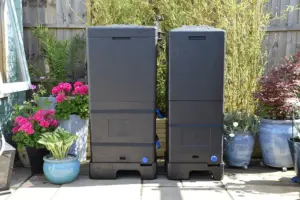
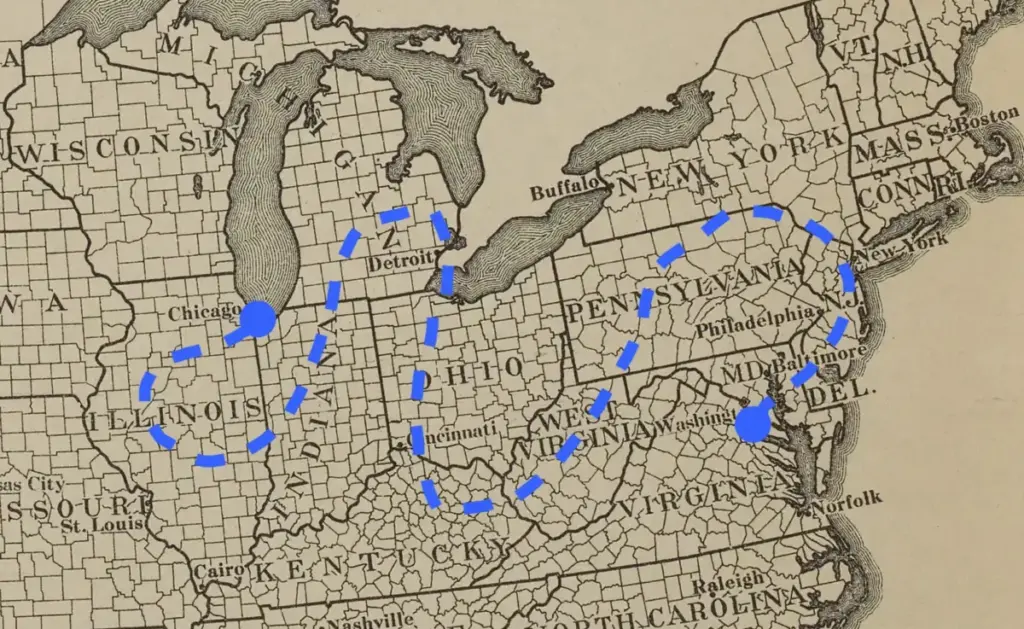
The Biodiversity Heritage Library (BHL)—the world’s largest open-access digital literature repository for biodiversity archives and natural history data—has officially initiated a monumental, three-week technological migration. After years of anchoring its core technical infrastructure within the Smithsonian data center just outside Washington, D.C., the BHL Tech Team is successfully shifting its operational backbone to the prestigious Field Museum in Chicago, Illinois.
This infrastructural relocation represents far more than a routine server migration. It is a strategic partnership designed to guarantee the long-term resilience, accessibility, and preservation of global biodiversity knowledge. For researchers, taxonomists, historians, and citizen scientists worldwide, the overarching priority of this transition is seamless continuity.
Through meticulous advanced network testing, redundant deployment strategies, and a phased rollout schedule spanning June 11 to June 25, 2026, the BHL administration has engineered a migration pathway designed to keep the digital library online. While minor, temporary disruptions to advanced text-mining features are scheduled, core catalog metadata searches will remain uninterrupted.
As the BHL servers complete their westward journey, this article provides an authoritative, in-depth look at the migration chronology, the technological architecture underpinning the move, the collaborative efforts of the Field Museum and Smithsonian teams, and a tongue-in-cheek ecological assessment of how digital infrastructure "acclimates" to a brand-new Midwestern habitat.

Detailed Chronology: The Three-Week Migration Roadmap
Executing a zero-downtime (or near-zero-downtime) migration for a petabyte-scale digital library requires military-grade precision. The BHL Tech Team has structured the relocation into a carefully measured, multi-phase sequence across June 2026.
Phase 1: Network Configuration and Silent Integration (Pre-June 2026)
Before a single physical server was unplugged from the Smithsonian racks, the BHL team laid the groundwork in Chicago. Engineers established, configured, and stress-tested the network architecture at the Field Museum.
In a testament to the success of these preliminary trials, BHL services were quietly deployed to run on the Field Museum’s network well ahead of the physical transit dates. This early integration gave the technical staff immense confidence, ensuring that when the heavy production databases and resource-intensive full-text-search servers were finally shipped, the target environment was entirely stable and ready to receive them.
Phase 2: The Warm-Up Shipment (June 11, 2026)
The first official wave of physical server transport took place on June 11, 2026. Designed as a logistical warm-up, this initial transfer involved auxiliary components and secondary nodes.
Because of the redundant architecture established during the pre-migration phase, this shipment had zero impact on the regular functions of the BHL website. Users browsing the site, downloading PDF monographs, and interacting with core catalog features experienced no downtime or latency degradation.

Phase 3: The Production Migration & Full-Text Search Interruption (June 25, 2026)
The definitive milestone of the migration occurs on June 25, 2026. On this day, the primary production databases and the core full-text-search servers make their transit to Chicago, marking the official transition point where BHL will be served live from the Field Museum.
While the primary website will remain accessible, the physical transit of the full-text-search server necessitates a temporary outage for that specific feature.
- What remains active: Users will retain full, uninterrupted ability to search titles, authors, publication years, subjects, and all other standard bibliographic catalog metadata.
- What is temporarily offline: The ability to execute deep full-text searches inside the bodies of millions of digitized books and scientific articles will be offline.
- Duration: This targeted limitation is projected to last for 5 to 6 days, strategically positioned over a weekend to minimize disruption to academic and research workflows.
By June 30, 2026, the full-text-search servers will be fully integrated, indexed, and online in their new Chicago home.
Supporting Context & Metrics: Environmental and Technical Parallels
In a delightful tradition of blending technical documentation with natural history humor, the BHL team evaluated whether their digital hardware would "feel at home" in the Midwest by comparing historical environmental metrics of their former East Coast home with their new Midwestern domicile. Utilizing vintage data from the historic Atlas of American Agriculture, the team examined moisture, soil, and vegetation markers.
Hydrological Profile: Rainfall and Lake Michigan
- East Coast Baseline: 35–40 inches (85–100 cm) of annual rainfall.
- Chicago Environment: 30–35 inches (75–88 cm) of annual rainfall.
While raw precipitation figures show a slight decrease in the Midwest, this meteorological deficit is more than adequately offset by Chicago’s crowning geographic feature: Lake Michigan. As one of the largest freshwater reservoirs on Earth, the lake provides an immense atmospheric and hydrological buffer. However, the BHL team notes that contemporary climate conditions—specifically a moderate drought index currently affecting the north-central United States—will be monitored to ensure optimal baseline operating conditions.

Edaphic Factors: Soil Transitions
Digital servers do not root in dirt, but metaphorical soil matters. BHL is departing the Gray-Brown Podzolic soils typical of the Mid-Atlantic seaboard and entering the domain of the Northern Prairie soils.
Cartographic analysis of historical soil distributions reveals that the familiar podzolic profiles of the East Coast maintain surprising proximity and overlap zones with the diverse soil matrices of Illinois, offering hope that the servers will settle comfortably into their new rack space without experiencing digital shock.
Botanical Indicators: Forests to Prairies
Perhaps the most dramatic ecological shift lies in the surrounding vegetation. The U.S. East Coast is historically dominated by dense Oak-Pine and Chestnut-Oak-Yellow Poplar forests. By contrast, Chicago places BHL squarely within the realm of the Tall Grasses of the Prairie Grasslands.
Fortunately for the migrating hardware, the region is not devoid of familiar arboreal company. Pocketed within the broader prairie matrix are robust stands of Oak-Hickory forests. The BHL team optimistically notes that the presence of these familiar oaks should provide a comforting transitionary bridge for the migrating data nodes.
Official Statements and Institutional Collaboration
The seamless execution of this infrastructure move is a direct result of deep institutional cooperation. Moving petabytes of irreplaceable historical literature—spanning centuries of biodiversity documentation—requires absolute trust between participating cultural heritage institutions.

"We are deeply grateful to the Field Museum for welcoming BHL’s technology and helping ensure that biodiversity knowledge remains available to the global community. The support from their administration and technical team is invaluable."
— BHL Administration & Technical Taskforce
The Smithsonian Institution, which has housed BHL’s technical core for decades, praised the collaborative spirit of the transition. The partnership with the Field Museum not only diversifies BHL’s institutional footprint but also leverages the world-class technological infrastructure and scientific heritage of Chicago’s premier natural history institution.
To keep the global community informed, the BHL has launched a dedicated Field Museum Infrastructure Move Informational Page, complete with transit maps, status trackers, and technical logs detailing the physical journey of the servers from Washington, D.C., to the shores of Lake Michigan.
Future Outlook: A Resilient Foundation for Global Biodiversity Research
As the final servers are racked, powered, and brought online at the Field Museum in late June 2026, the Biodiversity Heritage Library enters a bold new chapter.
The successful completion of this migration secures more than just operational continuity; it reinforces the decentralized, robust architecture necessary for a global public utility. In an era where digital preservation is paramount to tracking and mitigating global biodiversity loss, having a secure, high-performance technological home at the Field Museum ensures that historical insights—from 18th-century botanical illustrations to modern taxonomic monographs—remain instantaneously accessible to scientists, conservationists, and nature enthusiasts everywhere.

With familiar oaks nearby, abundant freshwater resources, and a state-of-the-art technical home, the Biodiversity Heritage Library is primed to put down deep, flourishing roots in Chicago for decades to come.
Stay updated on the final stages of the migration by visiting the BHL Blog and subscribing to their official newsletter for real-time deployment alerts.