

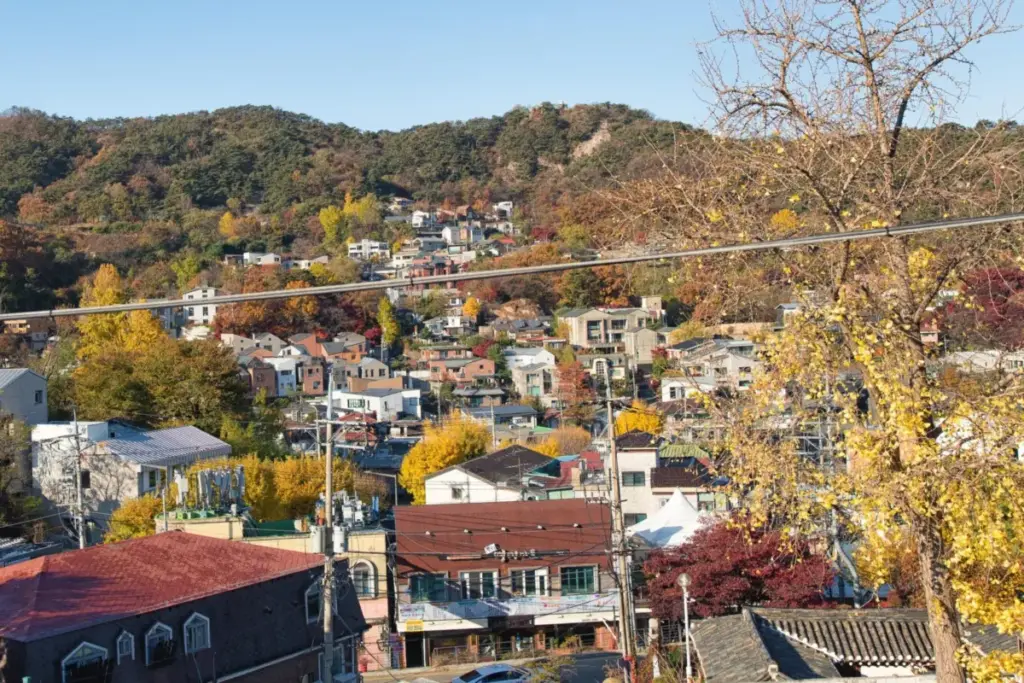
Executive Overview
In the picturesque, historically preserved neighborhood of Buam-dong, nestled quietly in the northern foothills of Seoul, a quiet drama has captivated South Korea. At the center of the controversy is a towering ginkgo tree—affectionately dubbed "Grandpa Ginkgo" by locals—estimated to have stood sentinel along a narrow residential street for over a century. Once a vibrant symbol of resilience, longevity, and community life, the tree became the unexpected victim of a suspected targeted poisoning campaign during the spring and summer of 2026.
What began as a resident’s casual observation of unseasonal leaf-drop quickly escalated into a high-stakes local investigation, complete with amateur sleuths combing through closed-circuit television (CCTV) footage, tense confrontations with a neighboring cultural institution, formal police investigations, and emotional communal healing rituals. The primary suspect in the alleged arboreal sabotage is the nearby Whanki Museum—a cultural establishment dedicated to the legendary abstract painter Kim Whanki, whose artistic philosophy famously celebrated deep communion with nature.
As autumn casts its golden hues across the South Korean capital, Grandpa Ginkgo’s branches remain largely brittle and brown, sitting at what arborists estimate is a critical ninety-percent threshold toward death. Yet, while the physical survival of the tree hangs in the balance, the campaign to save it has achieved something remarkable: it has transformed an isolated, modern urban populace into a tightly knit community, offering profound lessons in urban ecology, legal protections for neighborhood nature, and the psychological healing power of shared stewardship.
Detailed Chronology: From First Leaf Fall to Detective Work
The Early Warnings of Spring
Every summer, Seoul transitions into a lush, dense canopy of emerald green under the weight of humid monsoon skies. However, as April melted into May 2026, residents along the quiet stone-walled lanes of Buam-dong noticed something profoundly wrong with their most famous arboreal neighbor.

Jung, a resident who moved to the neighborhood four years prior and spearheaded the subsequent grassroots campaign, was the first to sound the alarm. "Green leaves were falling to the ground, which shouldn’t happen at that time of year," she recalled. Passing the ginkgo daily as part of her routine commute, Jung had grown deeply attached to the entity she viewed not merely as flora, but as a comforting familial presence. "Imagine a grandfather who silently embraces you every day, listens to you, and has always been strong and full of life," Jung reflected. "Suddenly, he begins to die. How heartbreaking would that be?"
As weeks passed, a rotting carpet of fan-shaped foliage accumulated prematurely around the base of the trunk. Local children, such as 10-year-old Kim On who walked past the tree daily on his way to school, expressed immediate distress, noting that the tree had stood long before he was born and that the thought of it collapsing filled him with profound sadness. Similarly, 74-year-old Park Jeon-hee, a lifelong resident of Buam-dong, referred to the ginkgo as his "oldest friend."
The Discovery of the Funnels
As concern escalated into suspicion, Jung and her neighbors began inspecting the immediate perimeter of the tree. Tucked discreetly behind the massive trunk, they uncovered ten white plastic funnels protruding from the soil—apparatuses typically utilized for deep-root irrigation or nutrient delivery. However, the rapidly declining health of the ginkgo suggested a much darker utility.
Determined to uncover the truth, the residents transformed into a team of amateur detectives. They canvassed neighboring houses and successfully secured footage from a private security camera overlooking the street. The digital recording captured a critical piece of evidence: early one morning in late April, two individuals wearing white gloves were filmed crouching near the base of the tree operating a portable drill.

This visual evidence intersected with municipal administrative knowledge. Local residents remembered that the Whanki Museum—whose perimeter brick wall sits mere inches from the ginkgo’s root system—had previously approached local landowners and the district office requesting permission to remove the tree. The museum’s administration had formally claimed that the ginkgo’s expanding root matrix was destabilizing and structurally compromising their outer wall.
Confrontation at the Museum Gates
Armed with CCTV footage, testimonies from professional arborists who confirmed the likelihood of herbicide poisoning, and mounting public anger, a delegation of Buam-dong residents—accompanied by four local police officers—marched directly into the Whanki Museum.
According to accounts from Jung and her neighbors, when confronted by the community representatives, a museum employee effectively acknowledged institutional involvement in the tree’s sudden distress. "Once they had said it, there was really no taking it back," one neighbor stated.
The community swiftly filed formal criminal charges against the museum’s director, prompting local law enforcement to open an active investigation into the suspected vandalism and destruction of public greenery.

Supporting Context & Metrics: Buam-dong, Ginkgos, and Cultural Irony
The Unique Charm of Buam-dong
Buam-dong occupies a unique geographic and cultural niche within Seoul. Tucked securely between two rugged mountains—Inwangsan and Bugaksan—the neighborhood offers a serene respite from the relentless commercial hustle and neon glare of Korea’s sprawling capital.
For decades, the neighborhood’s urban development has remained strictly regulated. This was largely due to its proximity to the Blue House (Cheong Wa Dae), the former official executive office and residence of the South Korean president. While the presidential office has since relocated, the strict zoning laws and historical preservation mandates remained, allowing Buam-dong to retain its narrow, winding lanes, quaint cafes, low-rise residential homes, and historic stone walls.
In such a tightly packed urban ecosystem, street trees hold immense social and ecological capital. While ginkgo trees (Ginkgo biloba) are common throughout Seoul—frequently planted along major metropolitan boulevards for their resilience against pollution and their brilliant autumn displays—Grandpa Ginkgo was uniquely cherished. It did not belong to a private corporate courtyard or a restricted national park; it belonged entirely to the public domain of the street.
The Deep Symbolism of the Ginkgo
In Korean culture, the ginkgo tree is revered as a living monument of longevity, resilience, and sacred endurance. Often referred to as "living fossils" because the species has remained virtually unchanged for over 200 million years, ginkgos frequently stand as temple guardians or village centerpieces.

The supreme irony of the Buam-dong controversy lies in the identity of the suspected culprit. Opened in 1992, the Whanki Museum was established to honor the life and legacy of Kim Whanki (1913–1974), a pioneering figure in modern Korean abstract art often celebrated internationally as the "Picasso of Korea."
Architect Woo Kyusung designed the museum complex specifically to harmonize with the surrounding natural topography—incorporating the moon, mountains, clouds, rocks, and trees that heavily influenced Kim’s artistic output. Moreover, Kim Whanki famously wrote literary essays under the pen name Su-wha, which translates poetically to "conversation with trees."
Decades after the artist’s passing, the cultural institution bearing his name found itself accused of attempting to systematically exterminate a centenarian tree because its roots inconvenienced a brick boundary wall.
Official Statements and Institutional Responses
The Whanki Museum’s Stance
Facing intense public backlash and national media scrutiny, the Whanki Museum has maintained a carefully guarded official posture. The institution has neither publicly confirmed nor denied the allegations of injecting herbicide via the discovered funnels, and representatives have consistently declined to answer direct inquiries from domestic and international press outlets.

However, in the immediate wake of the scandal’s public exposure in May, the museum issued a formal written statement. The communication asserted that the compound’s outer brick wall was actively "collapsing because of the ginkgo’s roots." The administration claimed it had previously dispatched formal letters to more than forty local property owners and municipal stakeholders "requesting a solution" to the structural hazard. According to the museum, because those inquiries went unanswered, internal staff members "attempted to resolve the situation"—though the statement conspicuously omitted any operational details regarding what actions were actually taken at the base of the tree.
Local Government and Police Investigation
Municipal authorities have offered mixed assessments regarding the structural claims made by the museum. A representative from the local district council informed investigators that an engineering and horticultural inspection conducted the previous year found "no meaningful connection" between the root system of the ginkgo tree and the structural cracking observed on the museum’s outer masonry wall.
"If there had been a genuine structural threat or an actionable issue, our office would have taken appropriate preventative action and formally informed all relevant parties," the official emphasized.
Regarding the legal dimensions of the case, the Seoul district police have acknowledged receiving formal complaints and initiating an inquiry into the museum director and involved staff. While police officials declined to disclose granular details of the ongoing probe, the filing marks a significant escalation in how municipal vandalism against urban ecology is prosecuted in South Korea.

Future Outlook: Community Healing, Activism, and the Fate of Grandpa Ginkgo
Grassroots Mobilization and Ecological Activism
The assault on Grandpa Ginkgo catalyzed a broader political and ecological movement throughout Seoul. Environmental organizations, including the Seoul branch of the Korean Federation for Environmental Movement (KFEM), quickly mobilized behind the Buam-dong residents.
Choi Jin-woo, a prominent environmental activist working with the campaign, expressed his initial disbelief upon learning of the incident. "When I first heard that a tree next to a museum had been poisoned with herbicide and was dying, I simply couldn’t believe it," Choi noted. "But when I saw the ginkgo shrivelling in real-time, I realized something this horrific could actually happen in our society."
In response, KFEM launched a nationwide citizen petition demanding legislative reforms to legally empower local residents as recognized "guardians of urban trees," granting communities formal oversight and veto power over the maintenance or removal of historical flora within municipal boundaries.
The Human Toll and Emotional Restoration
Beyond the legal battlegrounds and bureaucratic friction, the crisis served as an unexpected catalyst for human connection within Buam-dong. For Jung, who spent the spring and summer months locked in exhaustive advocacy, the campaign served as an unlikely medical and psychological rehabilitation.

Having suffered a severe physical illness the previous winter that left her largely immobile and deeply depressed, Jung initially experienced the tree’s decline as an extension of her own despair. Confined to her home, she would observe the ginkgo from her window, occasionally mustering the strength to walk over, press her face against its jagged bark, and inhale its earthy scent.
"I felt so depressed and hopeless, but those feelings disappeared. I entered a tree-like state," Jung reflected. "Although it has been heartbreaking, there were also incredibly moving moments. The neighborhood came together, cared for one another, looked after each other."
As her activism gained momentum, neighbors began leaving home-cooked meals by her doorstep. In return, she prepared vats of warm vegetable soup for neighbors she had lived near for years without ever meeting.
Rituals of Hope
As the summer months waned, arborists delivered a grim prognosis: the ginkgo was ninety percent dead, its vascular system severely compromised by systemic toxins. Realizing that conventional science might not save their centenarian friend, the community turned to cultural and spiritual traditions.

For weeks, groups of approximately twenty residents gathered regularly beneath the dying canopy. They tied handwritten notes of well-wishes fluttering against the bark, recited Kim Whanki’s poetic essays on nature, and engaged in communal healing practices. Local practitioners and nature lovers led the group in an "elm dance"—a meditative movement practice intended to foster collective ecological healing. A local shaman even performed a traditional blessing ritual aimed at cleansing the soil and calling back the tree’s vital energy.
Awaiting a Miracle
As autumn reaches its peak across South Korea, painting the broader cityscape in traditional blankets of brilliant golden yellow, the leaves of Buam-dong’s most famous ginkgo remain a brittle, crispy brown.
The legal battle winds slowly through the courts, and the museum maintains its silence, but the residents of Buam-dong refuse to surrender to despair. Whether through biological miracle, deep soil remediation, or sheer communal willpower, the neighborhood continues to watch and wait. For them, an autumn without the radiant, golden-feathered canopy of Grandpa Ginkgo is an unthinkable reality—and they remain steadfast in their refusal to let their silent guardian fade away without a fight.



