

Executive Overview
As world leaders descend upon Manhattan for the opening of the 81st United Nations General Assembly (UNGA), the global landscape has rarely appeared so fractured, fragile, and volatile. Kicking off its High-Level Week on September 18, 2026, and running through September 28, this year’s diplomatic convergence takes place against a backdrop of deep-seated geopolitical polarization and worldwide economic disruption. Ongoing armed conflicts, fractured supply chains, and widening trust deficits between the Global North and Global South threaten to paralyze multilateral institutions just as humanity faces its most urgent planetary threats.
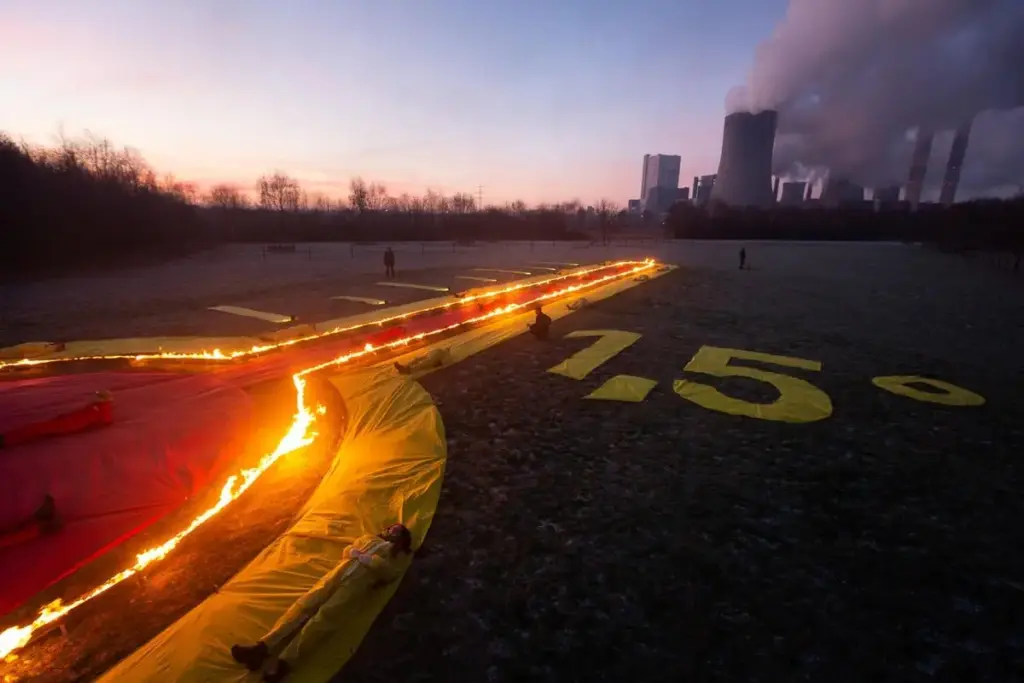
Chief among these existential threats is the accelerating climate crisis. The 2026 UNGA is not merely another routine diplomatic gathering; it is widely viewed as a make-or-break juncture in the international climate calendar. The central pillar of global climate policy—the commitment to limit global warming to 1.5°C above pre-industrial levels, enshrined in the landmark Paris Agreement—is now hovering on the precipice of being breached. Scientists, environmental advocates, and vulnerable nations warn that overshooting this critical threshold will unleash irreversible feedback loops, catastrophic economic losses, and unprecedented human displacement.
Running in parallel with the high-level diplomatic deliberations at UN Headquarters is New York Climate Week (NYCW), spanning September 20 to September 27. Together, these two mega-events form a high-stakes arena where heads of state, corporate titans, civil society leaders, and grassroots activists will grapple with the convergence of security and sustainability. This report provides a comprehensive examination of the proceedings, the underlying systemic pressures, the critical metrics defining our current climate trajectory, and what this pivotal week means for the future of international cooperation.
Detailed Chronology of the 2026 High-Level Week
The 81st UNGA High-Level Week is structured around a rigorous agenda designed to address multiple cascading crises simultaneously. Below is the operational timeline and thematic progression guiding world leaders in New York:
[September 18] ──> Opening of UNGA High-Level Week & Preliminary Security Briefings
[September 20] ──> Launch of New York Climate Week (NYCW) / Civil Society Mobilizations
[September 22] ──> General Debate Commences: Heads of State Address Geopolitical Strains
[September 24] ──> High-Level Climate Action Summit & 1.5°C Overshoot Special Session
[September 26] ──> Ministerial Roundtables on Climate Finance & Debt Restructuring
[September 28] ──> Closing Plenary & Adoption of Multilateral Action Frameworks
Phase 1: Setting the Stage (September 18 – September 19)
The initial days of the High-Level Week are dedicated to procedural openings, bilateral diplomacy behind closed doors, and security assessments. With ongoing geopolitical conflicts dominating diplomatic channels, Secretary-General António Guterres is expected to use his opening remarks to issue a stark warning against fragmentation. Preliminary sessions will focus heavily on how global trade disruptions and energy insecurity are undermining national capacities to transition away from fossil fuels.
Phase 2: The Parallel Convergence of Climate Action (September 20 – September 22)
As New York Climate Week officially opens on Sunday, September 20, the focus pivots from traditional statecraft to multi-stakeholder mobilization. City streets, corporate boardrooms, and university auditoriums will host panels detailing private-sector accountability, technological innovations in carbon removal, and local adaptation strategies. On September 22, the UN General Debate officially commences, setting the stage for national leaders to deliver their high-profile addresses from the iconic General Assembly podium.
Phase 3: The Climate Reckoning and 1.5°C Focus (September 23 – September 25)
Mid-week proceedings will feature dedicated summits centered squarely on the climate emergency. Recognizing that current nationally determined contributions (NDCs) fall dangerously short of Paris Agreement targets, the agenda features specialized plenaries addressing the looming 1.5°C overshoot. Negotiators will attempt to bridge deep divisions over climate finance, specifically concerning adaptation funds, loss and damage mechanisms, and the capitalization of the transition economies of the Global South.
Phase 4: Accountability, Financing, and Closing Plenaries (September 26 – September 28)
The final stretch of the High-Level Week will concentrate on actionable financial commitments and accountability frameworks. Ministerial roundtables will address the systemic debt crises plaguing developing nations—many of which are simultaneously battling climate-induced disasters and soaring inflation. The week culminates on September 28 with closing plenaries designed to synthesize policy declarations and establish monitoring benchmarks for the road to COP31.
Supporting Context & Metrics: The Anatomy of the 1.5°C Overshoot
To understand the intense urgency permeating the hallways of the United Nations this week, one must examine the hard data defining our planetary trajectory. The 2026 UNGA occurs against a backdrop of compounding environmental degradation and economic instability.
The Mathematics of the Overshoot
According to landmark assessments by the United Nations Environment Programme (UNEP) and the Intergovernmental Panel on Climate Change (IPCC), greenhouse gas emissions have not yet peaked at the scale required to hold warming to 1.5°C. Current emissions pathways indicate that the world is on track to temporarily—and potentially permanently—exceed this critical threshold within the next decade.
An "overshoot" scenario implies that global temperatures will rise past 1.5°C before theoretical carbon dioxide removal (CDR) technologies could theoretically drag them back down. However, scientists increasingly warn that relying on unproven large-scale CDR is a perilous gamble. Exceeding 1.5°C, even temporarily, triggers cascading ecological tipping points:
- Cryosphere Collapse: Accelerated melting of Arctic sea ice and Greenland ice sheets, committing coastal cities worldwide to severe sea-level rise.
- Marine Ecosystem Degradation: Mass coral reef die-offs, threatening the marine food webs that sustain over a billion people.
- Extreme Weather Amplification: Exponential increases in the frequency, duration, and intensity of mega-droughts, cataclysmic flooding, and high-intensity tropical cyclones.
The Geopolitical and Economic Backdrop
This ecological crisis is unfolding simultaneously with a global economic restructuring driven by fragmentation. The weaponization of supply chains, protectionist trade policies, and prolonged regional conflicts have drained fiscal headroom in both developed and developing nations. Military expenditures globally have surged to post-Cold War highs, drawing vital capital away from international climate finance and sustainable development goals (SDGs).
Developing nations find themselves caught in a triple bind: they bear the brunt of climate impacts they did little to cause, they face exorbitant borrowing costs on international capital markets due to macroeconomic instability, and they are pressured to divest from fossil fuels without receiving the promised financial transfers from industrialized nations. This structural inequality threatens to rupture the multilateral consensus required to enforce global climate agreements.
Official Statements and Diplomatic Postures
The rhetoric emanating from podiums and press briefings during the opening days of the 81st UNGA reflects profound tension between diplomatic optimism and stark realism.
"We are running out of time, and we are running out of excuses. The science is unequivocal: breaching the 1.5-degree limit is not a distant theoretical risk; it is an active hazard unfolding in real-time across our fields, our forests, and our coastal communities. If multilateralism fails to deliver a course correction this week in New York, history will judge this generation of leaders not by their promises, but by their paralysis."
— Senior United Nations Environmental Official
Civil society organizations have amplified this sentiment, adopting an aggressive posture of accountability. Representatives from environmental coalitions, including Greenpeace—which is providing continuous live-blogging and analytical coverage of the UNGA proceedings—have emphasized that incremental diplomacy is no longer adequate.
"For years, world leaders have flown to New York to deliver eloquent speeches about sustainability while quietly subsidizing the fossil fuel economy behind closed doors. The 2026 UNGA cannot be another talking shop. An overshoot of 1.5°C means millions of displaced climate refugees, destroyed livelihoods, and irreversible ecosystem loss. Leaders must move past empty rhetoric and commit to binding phase-out timelines backed by real financial reparations for the Global South."
— International Environmental Policy Spokesperson
Conversely, representatives from major industrial economies and energy-producing nations have emphasized the complexities of managing an orderly energy transition amid global supply chain shocks. Their messaging focuses on technological innovation, carbon capture, and pragmatic transition periods designed to protect domestic energy security while gradually reducing emissions intensity. This friction between rapid phase-out advocates and gradualist energy security proponents forms the central ideological fault line of the 81st session.
Future Outlook: The Road Beyond New York
As the 81st UN General Assembly and New York Climate Week draw toward their conclusion on September 28, the critical question remains: Will these deliberations translate into tangible policy action, or will they dissolve into another cycle of unimplemented communiqués?
The outcomes of this week will cast a long shadow over the international calendar, serving as the definitive staging ground for upcoming climate negotiations and regional summits. Several critical indicators will determine whether the 2026 UNGA achieved a meaningful breakthrough:
- Enhancement of NDCs: Whether major emitters signal a concrete willingness to strengthen their national climate targets ahead of upcoming statutory deadlines under the Paris Agreement.
- Climate Finance Architecture: Concrete movement toward restructuring multilateral development banks (MDBs) and operationalizing loss and damage funding to alleviate debt distress in vulnerable countries.
- Geopolitical De-escalation: The extent to which diplomatic channels opened during UNGA can isolate climate action from broader geopolitical conflicts, preserving scientific and environmental cooperation across ideological divides.
The stakes could not be higher. As the world watches New York over the coming days, the decisions—or omissions—of the leaders gathered at UN Headquarters will determine whether humanity retains control over its planetary destiny or surrenders to an era of unmitigated climate disruption.
Stay tuned for rolling updates, expert analyses, and live reporting as the 2026 UN General Assembly High-Level Week unfolds.



