

Executive Overview
As diplomatic delegations prepare for the COP31 UN Climate Summit in Antalya, Türkiye, civil society leaders, trade unions, and developing nations are driving a high-stakes campaign to operationalize a global "Just Transition" mechanism. First conceptualized through the Just Transition Work Programme (JTWP) and formally agreed upon at COP30 in Belém, Brazil, this proposed institutional body—informally dubbed the Belém-Antalya Mechanism (BAM)—is designed to assist nations, regions, and communities in shifting away from fossil fuels without exacerbating socio-economic inequality.
The ambition for COP31 is clear: convert abstract commitments into an operational structure with concrete functions, clear governance, and dedicated capacity-building pathways ahead of full deployment in 2027. However, behind the unified rhetoric surrounding equity and climate justice lies deep geopolitical fragmentation. Negotiators remain sharply divided over the mechanism’s scope, its relationship with broader international trade rules, and the perennial, contentious issue of climate finance.
While developed economies advocate for a targeted mechanism focused primarily on energy sector labor realignment and fossil fuel phaseout, developing nations—backed by major labor groups—are pushing for a comprehensive, economy-wide mandate covering agriculture, heavy industry, and green industrial development. As diplomats gather for preliminary sessions ahead of Antalya, the fundamental question remains: Will the Belém-Antalya Mechanism emerge as a transformative pillar of the Paris Agreement, or will it be reduced to another institutional talking shop?
Detailed Chronology
The pathway toward a globally sanctioned Just Transition mechanism reflects a multi-year evolutionary shift in United Nations Framework Convention on Climate Change (UNFCCC) negotiations, transitioning from general labor discussions to concrete multilateral architecture.
+-----------------------------------------------------------------------------------+
| CHRONOLOGY OF THE UNFCCC JUST TRANSITION WORK PROGRAMME                           |
+-----------------------------------------------------------------------------------+
| 2022 (COP27 - Sharm El-Sheikh)  | Establishment of the Just Transition Work         |
|                                 | Programme (JTWP) mandated.                        |
+---------------------------------+-------------------------------------------------+
| 2023 (COP28 - Dubai)            | JTWP formally launched; work streams on equity   |
|                                 | and socio-economic realignment begin.           |
+---------------------------------+-------------------------------------------------+
| 2025 (COP30 - Belém)            | Historic consensus reached to establish a       |
|                                 | dedicated Just Transition Mechanism (BAM).      |
+---------------------------------+-------------------------------------------------+
| June 2026 (SB64 - Bonn)         | Mid-year talks yield informal draft options for |
|                                 | design, but reveal deep structural divisions.   |
+---------------------------------+-------------------------------------------------+
| Sept 30 – Oct 2, 2026 (Sydney)  | Intersessional workshop hosted under the joint  |
|                                 | Australian-Turkish COP presidency framework.    |
+---------------------------------+-------------------------------------------------+
| November 2026 (COP31 - Antalya) | Target deadline to adopt operational governance |
|                                 | and establish a Transitional Committee.         |
+---------------------------------+-------------------------------------------------+
| 2027 (COP32 - Ethiopia)         | Target for full technical operationalization    |
|                                 | of the Belém-Antalya Mechanism.                 |
+-----------------------------------------------------------------------------------+
2022–2023: Genesis of the Just Transition Work Programme
The decision to formally establish the JTWP occurred at COP27 in Sharm El-Sheikh, with its operational parameters agreed upon a year later at COP28 in Dubai. The program was designed to create an official space under the UNFCCC to address the socio-economic dimensions of decarbonization, acknowledging that unmanaged energy shifts risk severe economic disruption, job losses, and regional destabilization.
2025: The Belém Breakthrough at COP30
At COP30 in Belém, Brazil, civil society advocacy and coalitions of developing countries successfully elevated the JTWP from a forum for dialogue into an actionable initiative. Parties agreed in principle to establish a permanent global mechanism aimed at delivering technical support, facilitating international cooperation, and enabling knowledge sharing to ensure low-carbon transitions are equitable.
June 2026: Gridlock and Progress at Bonn (SB64)
During the mid-year climate conference in Bonn, Germany, negotiators produced an informal preliminary note compiling structural options for the new mechanism. Despite reaching agreement on procedural aspects of reviewing the JTWP, deep political fault lines surfaced. Developing blocs, including the African Group, insisted on linking the JTWP review directly to the creation of the mechanism, while high-emitting economies and select negotiating groups sought to separate the processes to narrow the mechanism’s direct mandates.
Late 2026: Pre-COP Consultations in Sydney
Recognizing the risk of negotiations stalling at COP31, the co-presidencies of Türkiye and Australia organized an intersessional workshop in Sydney from September 30 to October 2, 2026. The forum brought together negotiators, civil society observers, and technical experts to narrow differences on governance structures and financing pathways prior to the Antalya summit.
2026–2027 Horizon: Antalya to Ethiopia
The roadmap championed by civil society organizations envisions COP31 in Antalya adopting the core modalities and governance structures of the mechanism, alongside the creation of a Transitional Committee. This committee would refine technical capabilities throughout 2027, paving the way for the Belém-Antalya Mechanism to become fully operational by COP32 in Ethiopia.
Supporting Context & Metrics
The Socio-Economic Realities of Displaced Labor
The urgency driving Just Transition negotiations is rooted in the significant socio-economic costs associated with rapid industrial realignment. While global investments in renewable energy continue to grow, the geographical and temporal distribution of green jobs rarely aligns perfectly with losses in traditional high-carbon sectors.
Data from the Organisation for Economic Co-operation and Development (OECD) highlights the disproportionate vulnerability of industrial workforces during major economic shifts:
+-----------------------------------------------------------------------------------+
| AVERAGE INCOME LOSS IN FIRST YEAR POST-LAYOFF                                     |
+-----------------------------------------------------------------------------------+
| Energy-Intensive Sectors (Power, Mining, Heavy Transport) | [=================] 58%|
| Non-Energy Sectors (General Manufacturing, Services)      | [==============--] 52%|
+-----------------------------------------------------------------------------------+
Workers displaced from energy-intensive sectors suffer an average 58% decline in earnings during their first year of unemployment, compared to a 52% average drop across other economic domains. This disparity reflects higher baseline wages, specialized skill sets that are difficult to transfer immediately, and the geographic concentration of heavy industries in single-employer regions.
The Coal Dependency Imperative
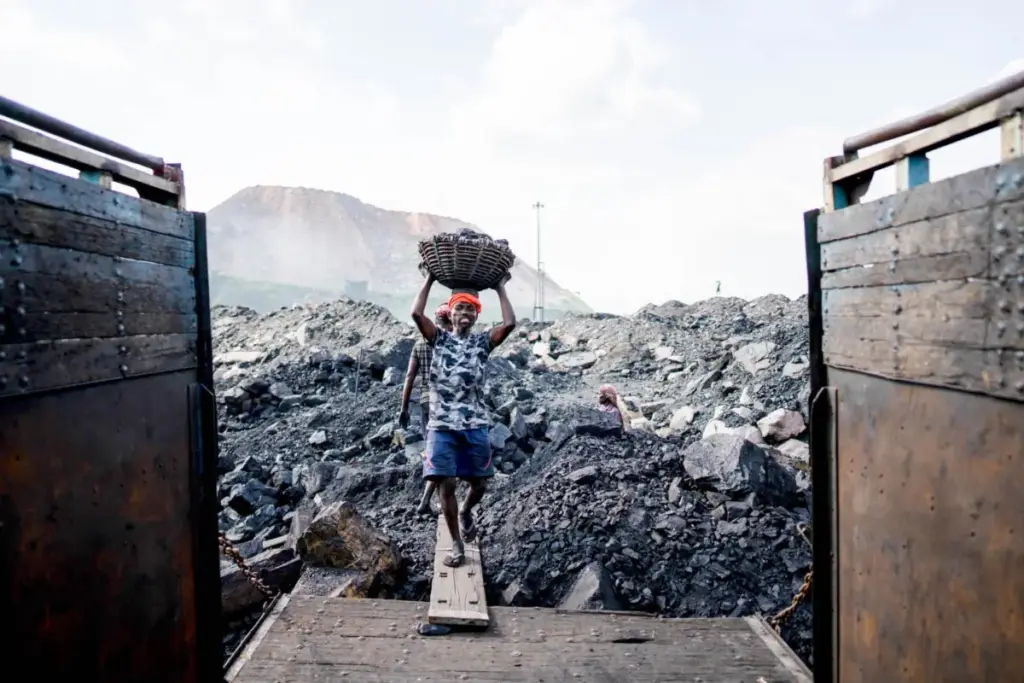
The global reliance on coal workforce transitions underscores the sheer scale of the challenge:

- Total Global Coal Workforce: Approximately 7.8 million people (International Energy Agency).
- Direct Mining Operations: 3.1 million workers are directly employed in open-cast and underground extraction.
- Regional Concentration: Over 70% of global coal mining employment is concentrated in emerging economies across Asia and Southern Africa, where municipal revenues and social safety nets are deeply intertwined with state-owned fossil fuel enterprises.
Global Coal Workforce Distribution (IEA Data)
+-----------------------------------------------------------------+
| Direct Extraction / Mining:  3.1 Million Workers (39.7%)        |
| Processing, Power & Transport: 4.7 Million Workers (60.3%)       |
+-----------------------------------------------------------------+
Trade Policy and Green Protectionism
A major point of contention in operationalizing the Belém-Antalya Mechanism involves cross-border trade policy. Emerging economies—most notably the Like-Minded Developing Countries (LMDC) bloc and members of the Arab Group—express concern that developed nations could use carbon border adjustment measures (such as the EU’s CBAM) as unilateral trade barriers disguised as climate policy.
Conversely, developed nations have resisted efforts to transform the Just Transition mechanism into an arbitral forum for trade disputes, maintaining that trade policy operates under the jurisdiction of the World Trade Organization (WTO).
Lessons from Bilateral Frameworks: The JETP Precedent
Negotiators working on the UNFCCC mechanism are taking cues from off-grid, bilateral Just Energy Transition Partnerships (JETPs) launched with countries like South Africa, Indonesia, and Vietnam. These initiatives have faced structural friction, offering important lessons for the BAM:
- Debt vs. Concessional Capital: A significant portion of JETP capital pledges consisted of market-rate loans rather than grants or highly concessional finance, increasing sovereign debt pressures in recipient nations.
- Implementation Bottlenecks: Structural realities—such as Indonesia’s challenges in accelerating the early retirement of young, captive coal-fired power plants—highlight that top-down financial pledges often struggle without localized political economy strategies.
Official Statements & Stakeholder Perspectives
The debate surrounding the Just Transition mechanism features diverse perspectives from international leadership, non-governmental organizations, and academic researchers.
+-----------------------------------------------------------------------------------+
| KEY STAKEHOLDER POSITIONS ON THE BELÉM-ANTALYA MECHANISM (BAM)                     |
+-----------------------------------------------------------------------------------+
| UN Leadership          | Demands systemic global support for fossil-fuel-dependent|
|                        | regions and workforce protection.                         |
+------------------------+----------------------------------------------------------+
| Developed Nations      | Favors a streamlined, technical mechanism focused on     |
|                        | energy decarbonization and capacity building.            |
+------------------------+----------------------------------------------------------+
| LMDC / Arab Group      | Demands broad scope (economic development, grants), while |
|                        | rejecting binding fossil fuel phaseout mandates.         |
+------------------------+----------------------------------------------------------+
| Civil Society / Labor  | Demands formal governance seats for labor and Indigenous  |
|                        | groups, paired with non-debt-inducing finance pathways.  |
+-----------------------------------------------------------------------------------+
United Nations Executive Leadership
Speaking at the UN High-Level Political Forum in New York, UN Secretary-General António Guterres emphasized the moral and operational necessity of incorporating labor protection into climate policy:
"We need to support the countries, communities and workers that depend on fossil fuels throughout the transition. Equity is not an option in climate action—it is the baseline condition for success."
Civil Society and Regional Advocates
Civil society leaders argue that for the mechanism to be meaningful, it must be backed by institutional authority and inclusive governance. Anabella Rosemberg, Senior Advisor on Just Transition at Climate Action Network (CAN) International, noted that while the Bonn negotiations yielded important structural options, significant work lies ahead:
"The informal document produced in Bonn gives us a starting canvas, but preliminary discussions alone will not secure operationalization. In the months leading to COP31, this issue must be elevated as an absolute priority by both the Turkish and Australian presidencies."
From Latin America, policy analysts emphasize the need for systemic mapping and community representation. Camila Mercure, Climate Policy Coordinator at the Environment and Natural Resources Foundation (FARN), stressed the mechanism’s practical mandate:
"The mechanism must contribute to international cooperation between countries, serve as a guide, support countries so that they can develop just transition strategies, and act as a channel for accessing funding to implement projects within their territories."
Laura Restrepo Alameda, Advocacy Officer at Climate Action Network Latin America (CANLA), focused on the governance framework required for the Belém-Antalya Mechanism:
"The key milestone between now and COP31 must be to define a structure for the BAM with clear governance, coordination, and the explicit inclusion of civil society. Workers, frontline communities, and Indigenous peoples who bear the brunt of economic shifts must have a permanent seat at the table."
Analytical and Academic Perspectives
Global policy analysts warn against expecting multilateral declarations to automatically resolve complex economic challenges. Anthony Dane of South Africa-based think-and-do tank Southern Transitions noted that the UN mapping exercise reveals fundamental differences in perspective:

"Some nations wish to use the mapping exercise to argue that extensive work is already underway and that a new mechanism requires minimal additions. Others are preparing to argue the exact opposite—highlighting severe gaps in international cooperation and technical support to demand substantial new resources."
Dr. Sandeep Pai, Senior Lead for International Energy Transitions at Duke University, cautioned against overly broad declarations that lack sector-specific operational depth:
"Global and broad declarations on a just transition mechanism provide a positive political signal. But we would be fooling ourselves if we think that just because something is declared at a COP, it will automatically be implemented on the ground. Each country operates under unique political and economic constraints—a coal-dependent economy like India faces fundamentally different challenges than a Costa Rica."
Addressing the core financial debate, Pai added:
"Many of those who are asking for money don’t fully know what project pipelines they are asking for, and many of those who hold the capital don’t want to give it away freely. You can negotiate a paragraph on finance into a final COP decision, but that fundamental political-economic reality does not change overnight."
Future Outlook & Strategic Imperatives
As negotiations move toward COP31 in Antalya, several critical challenges will dictate whether the Belém-Antalya Mechanism achieves operational success or encounters diplomatic stagnation.
+-----------------------------------------------------------------------------------+
| STRATEGIC ROADMAP: FROM COP31 TO FULL IMPLEMENTATION                              |
+-----------------------------------------------------------------------------------+
| [ COP31: Antalya ]                                                                |
|   |-- Formally adopt core structural modalities & governance architecture         |
|   |-- Establish an intersessional Transitional Committee                          |
|   +-- Create a Resource Mobilization Taskforce for non-debt financing             |
|                                                                                   |
| [ 2027 Intersessional Phase ]                                                     |
|   |-- Transitional Committee formulates operational guidelines                    |
|   +-- Mapping exercise finalized across UN entities, energy & agricultural sectors |
|                                                                                   |
| [ COP32: Ethiopia ]                                                               |
|   |-- Final adoption of operational frameworks                                    |
|   +-- Launch of technical support facility and direct project funding channels     |
+-----------------------------------------------------------------------------------+
Strategic Priorities for COP31
To deliver a functional mechanism, negotiators in Antalya must address four core operational priorities:
- Defining the Governance Framework: Deciding whether the BAM will function as an independent executive board under the COP, or as a technical advisory body reporting through existing UNFCCC subsidiary channels.
- Institutionalizing Inclusivity: Establishing formal constituency representation for trade unions, Indigenous organizations, youth, and local communities within the governance structure.
- Establishing a Technical Assistance Facility: Designing a concrete operational arm tasked with helping developing countries formulate national, multi-sectoral Just Transition frameworks and investable project pipelines.
- Creating a Dedicated Transitional Committee: Mandating a dedicated committee to work between November 2026 and COP32 in 2027 to finalize technical details, monitoring frameworks, and financial coordination tools.
Bridging the Scope and Sectoral Divide
A key challenge for negotiators is moving beyond an exclusive focus on energy systems. While retiring fossil fuel infrastructure remains critical, practical socio-economic shifts require addressing other high-emission, employment-heavy sectors—including heavy industrial manufacturing, agriculture, and land-use management.
Integrating these sectors into the BAM framework without overextending its operational capacity will require clear multi-tier guidelines.
The Finance Paradox: Debt vs. Concessional Support
The ultimate test of the Belém-Antalya Mechanism lies in its ability to unlock accessible financial resources. Developing nations remain wary of financial instruments that worsen sovereign debt distress, demanding that the BAM facilitate grant-based, highly concessional financial flows.
While COP31 may not create a standalone, multi-billion-dollar Just Transition fund within the UNFCCC, establishing a dedicated Resource Mobilization Taskforce—charged with aligning multilateral development bank balance sheets, private capital, and philanthropic resources—could offer a viable middle ground.
Conclusion
The upcoming negotiations in Antalya represent a pivotal moment for international climate policy. As physical climate impacts accelerate alongside global economic transformations, constructing a fair and effective transition mechanism is no longer just an ethical issue—it is an operational necessity for sustaining global climate action.



