

Executive Overview
As the global community confronts the compounding crises of rapid climate change and precipitous biodiversity loss, scientists and environmental researchers are increasingly looking backward to move forward. Historical baselines—detailed records of species distribution, population counts, and ecological behavior captured long before the onset of modern industrialization—are essential for accurately measuring anthropogenic impacts on life on Earth.
For two decades, the Biodiversity Heritage Library (BHL) has stood at the vanguard of this data recovery mission. Marking its 20th anniversary, the BHL has evolved into the world’s largest open-access digital library for biodiversity literature and archives, boasting a staggering corpus of over 64 million pages. Yet, a vast proportion of historical biodiversity data remains trapped in manuscript form: handwritten field journals, notebooks, and species lists resting quietly in climate-controlled archive rooms.
Recently, a monumental step toward unlocking these analog archives was taken through a collaborative initiative between the Ernst Mayr Library (EML) at Harvard University and the BHL. By combining rigorous archival preservation, modern cloud digitization, and cutting-edge artificial intelligence, researchers have successfully transcribed thousands of pages of ornithological field notes authored by renowned 19th-century zoologist Walter Faxon. Spearheaded by Harvard PhD candidate and 2026 Pforzheimer Fellow Mohit Mandal, this project illuminates both the profound potential and the distinct technical hurdles of deploying generative AI to decode historical manuscripts. Ultimately, the newly digitized datasets—slated for integration into the Global Biodiversity Information Facility (GBIF)—will empower modern researchers to model ecological shifts over a span of more than a century, offering vital insights to guide contemporary conservation strategies.
Detailed Chronology: From 19th-Century Field Notes to 21st-Century AI
The story of Walter Faxon’s notebooks bridges two eras of scientific inquiry separated by more than 140 years. Understanding the journey of these documents requires tracing a precise timeline from their creation in the Victorian era to their modern computational transformation.
1848–1920: The Life and Legacy of Walter Faxon
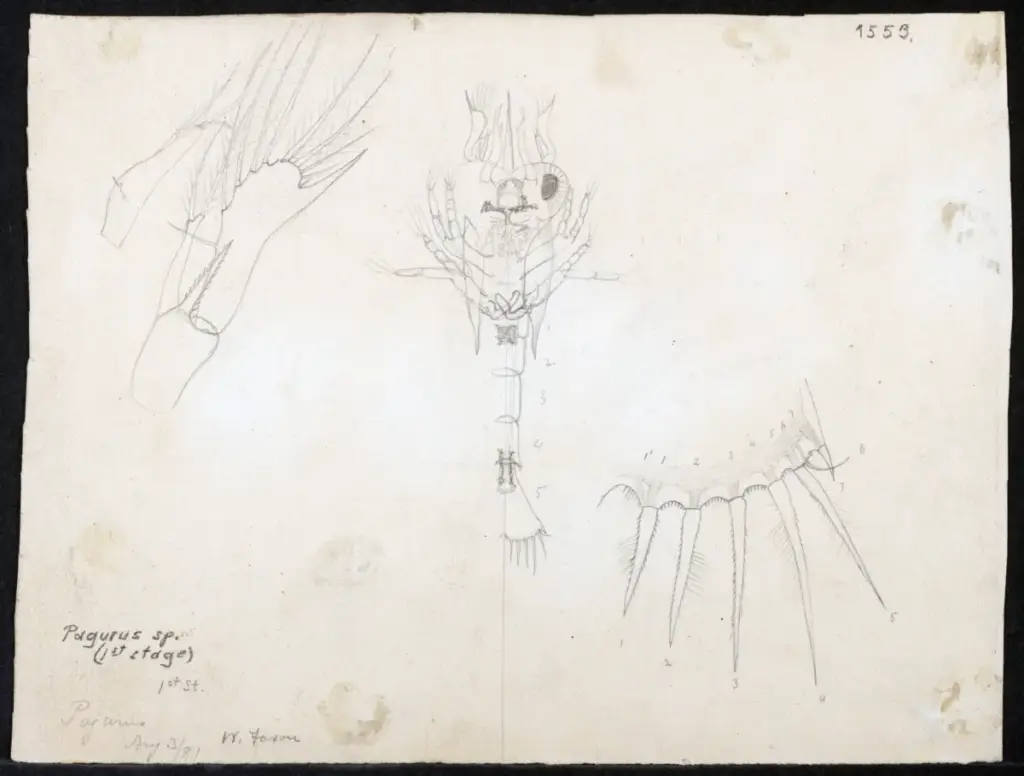
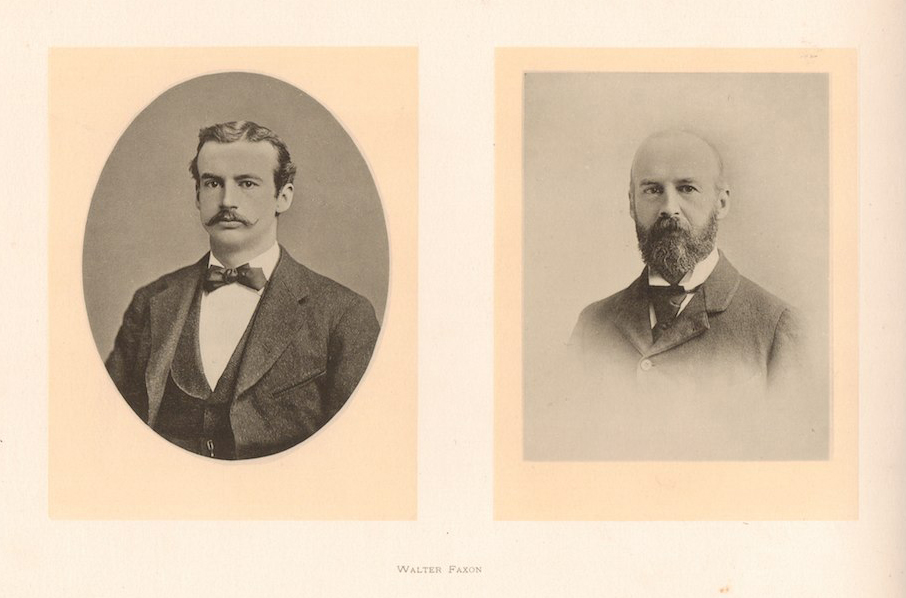
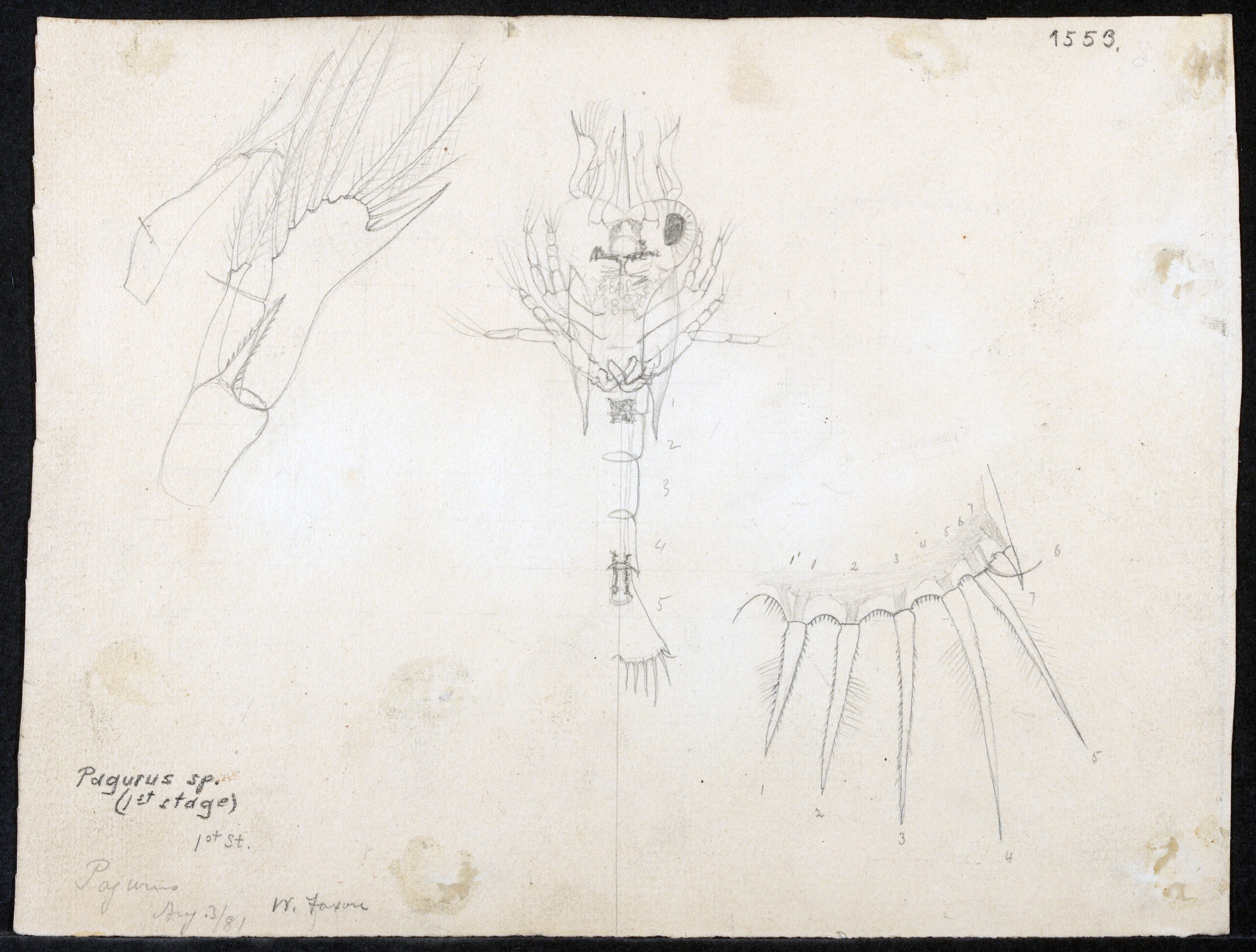
Born in Massachusetts on February 4, 1848, Walter Faxon dedicated his life to the rigorous observation and documentation of the natural world. He served as an Assistant Professor of Zoology at Harvard University from 1872 to 1886 and maintained a remarkable 46-year tenure as the Curator of the Invertebrate Department at Harvard’s Museum of Comparative Zoology (MCZ) from 1874 until his death on August 10, 1920. While his professional career centered primarily on crustaceans and mollusks—producing exquisite pencil sketches of specimens like hermit crabs (Pagurus species)—Faxon harbored a lifelong passion for ornithology.
Though he treated bird-watching as an avocation, his field methods possessed the uncompromising rigor of professional science. Operating in the field for nearly six decades, Faxon earned a sterling reputation within the scientific community. As noted by his peers, his scrupulous attention to detail and avoidance of error made him one of the most accurate field ornithologists of his generation; an identification made by Faxon was never questioned.
1886–1919: The Accumulation of Baseline Data
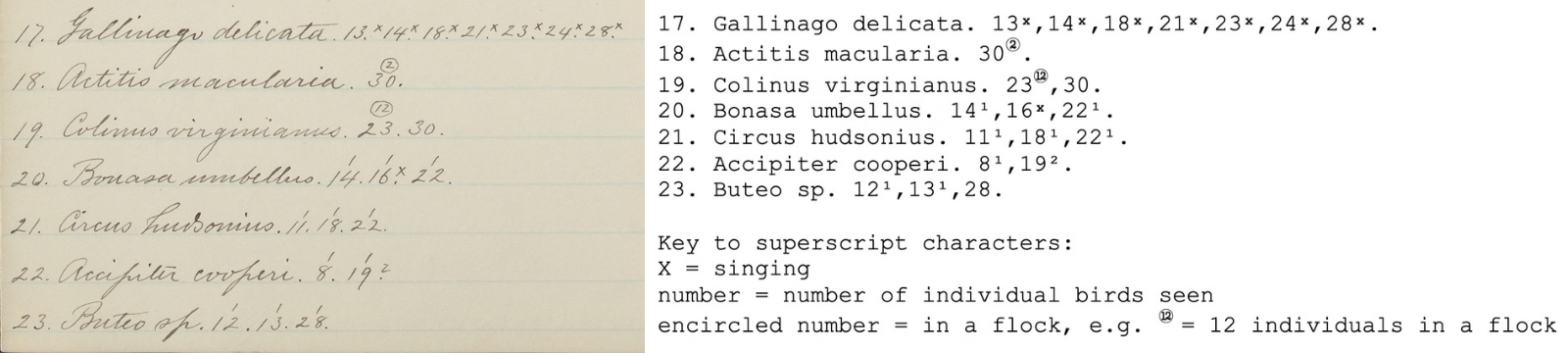
During a 33-year window spanning from 1886 to 1919, Faxon compiled thousands of granular bird observations across his field journals, notebooks, and species lists. These handwritten manuscripts captured precise scientific names, observation dates, localities, and headcounts, frequently supplemented by nuanced notes regarding sex, life stages, and avian vocalizations.
2025: Modern Digitization at Harvard
Decades later, these invaluable manuscripts—housed within the Ernst Mayr Library—were selected for preservation. In 2025, supported by the Harvard Library Collections Digitization Program under its institutional theme of Climate Change, the physical pages of the Faxon collection were systematically scanned, transforming fragile paper manuscripts into high-resolution digital image files.
June 1 – August 31, 2026: The Pforzheimer Fellowship and AI Transcription
To bridge the gap between static digital images and machine-readable data, EML hosted Mohit Mandal, a Harvard PhD candidate in Anthropology, as the 2026 Pforzheimer Fellow. Mandal’s mandate was clear: evaluate contemporary AI-powered tools and execute the full transcription of Faxon’s nearly 2,000 manuscript pages.
Mandal’s methodology began with a rigorous comparative assessment of leading generative AI models, specifically ChatGPT and Google Gemini. While Gemini demonstrated slight advantages in raw transcription accuracy, it suffered from restrictive file upload limitations and ecosystem constraints, functioning exclusively within Google Workspace tools without native support formats like Microsoft Word. Conversely, ChatGPT offered superior prompt flexibility, allowing Mandal to train and maintain consistent formatting rules across large batches of text.
To maximize fidelity, Mandal engineered a dual-AI workflow: initial transcripts were generated using ChatGPT, after which a secondary model, Claude, was employed to cross-verify the text, leveraging the complementary strengths of both systems to minimize transcription errors.
Supporting Context & Metrics: Unlocking the Data Pipeline
The integration of Faxon’s collection into the BHL is not merely an archival exercise; it is a critical link in a global data pipeline designed to combat accelerating species decline.
Collection Scope and Structural Assets
The Faxon collection in the Ernst Mayr Library represents a tight, highly focused corpus of approximately 2,200 pages. This total encompasses:
- 1,640 pages of manuscript field journals, bird lists, and field notebooks containing multi-decade species occurrence data.
- Eight detailed pencil drawings of Arthropoda and Crustacea, showcasing Faxon’s artistic and anatomical precision.
- Extensive correspondence, including 145 letters exchanged with fellow luminary ornithologist William Brewster (whose comprehensive papers are also preserved via the EML and BHL).
The Technical Challenges of Historical AI Transcription
While Mandal successfully achieved the primary goal of transcribing nearly 2,000 manuscript pages before the conclusion of his fellowship, the project exposed distinct obstacles inherent to historical document analysis (HDA) via artificial intelligence:
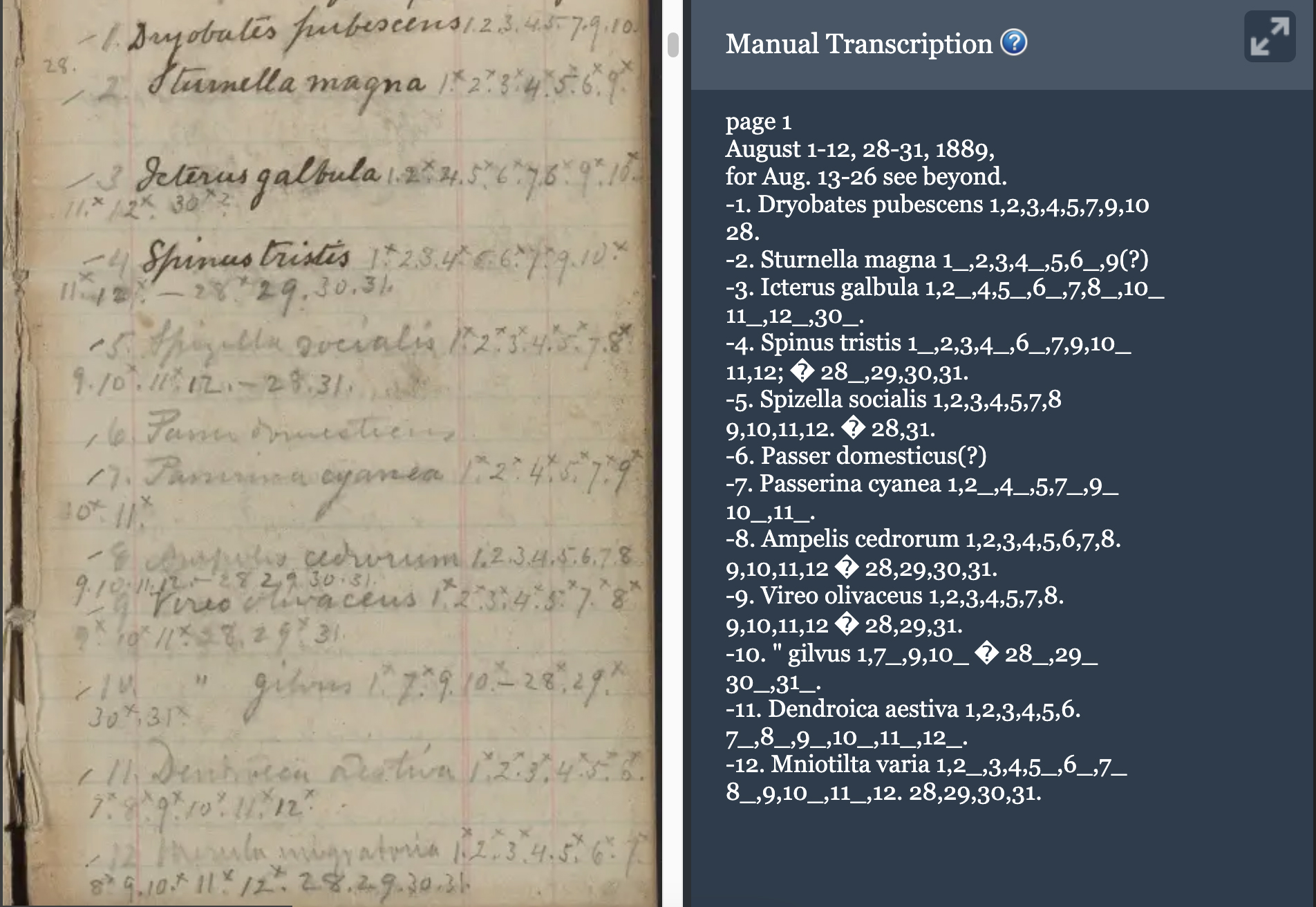
- Interlinear Markings and Symbols: Faxon frequently inserted tiny numbers, flock counts, and vocalization notes directly above the primary lines of text. Standard word processors and AI training sets often struggled to parse these interlinear positions, initially leading to omitted data. Mandal ultimately resolved this by training models to format these additions as superscript text.
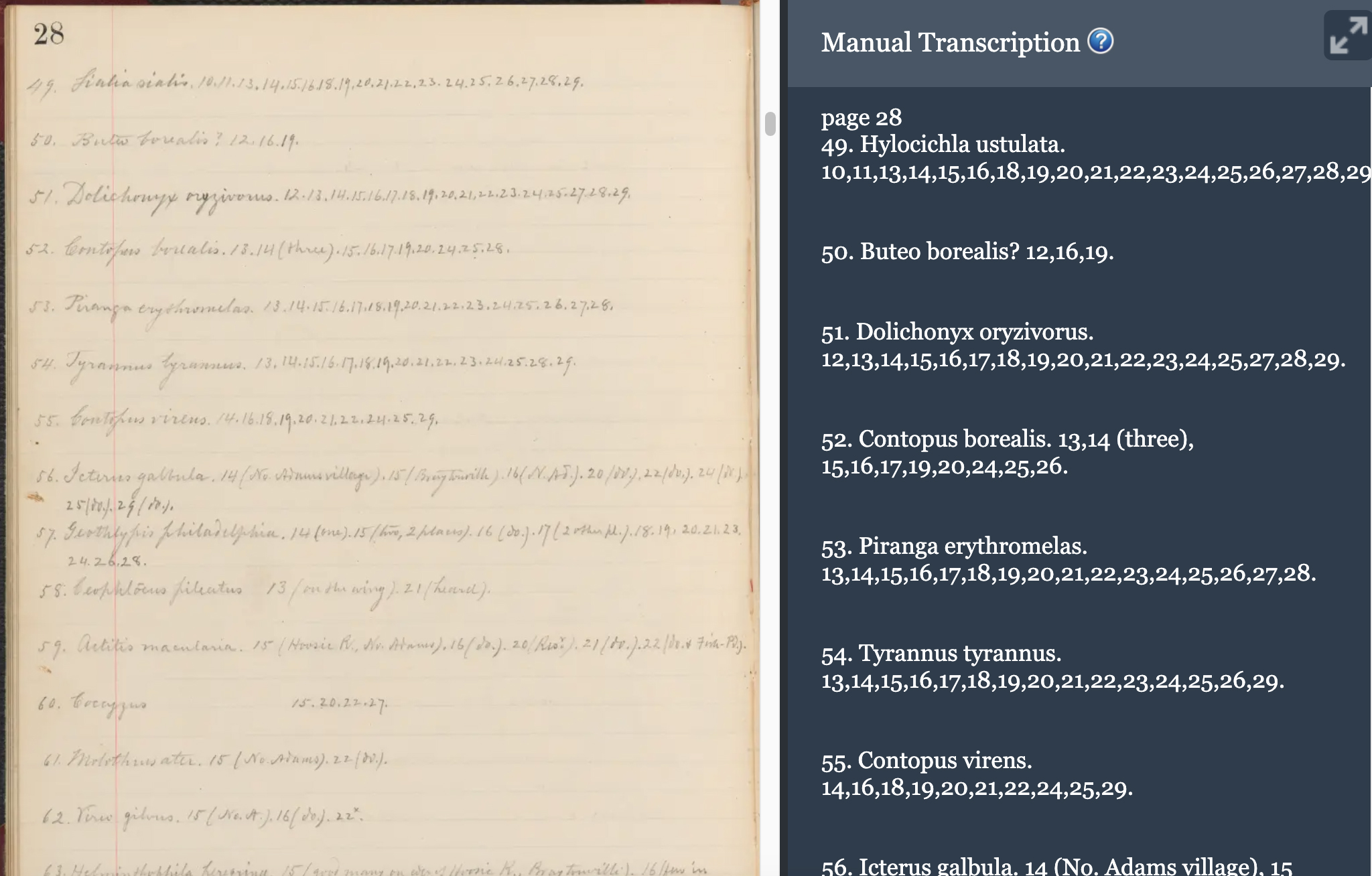
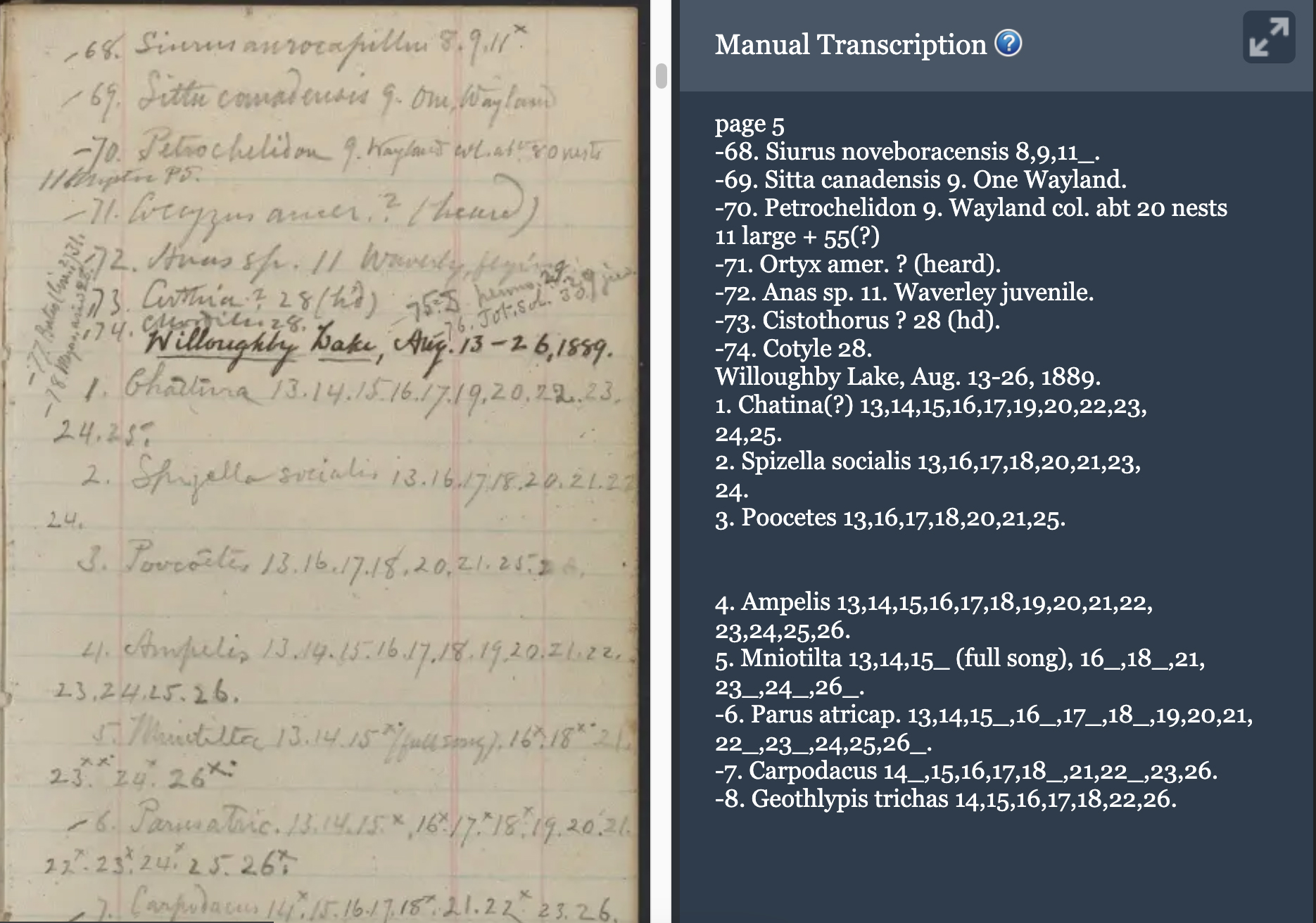
- Handwriting Anomalies and Damage: Faded pencil graphite, smudged ink, and marginal text written at sharp angles frequently baffled the models. In isolated instances, AI hallucination occurred; for example, Sialia sialis (Eastern Bluebird) was occasionally mis-transcribed as Hylocichla ustulata, and Merula migratoria was misread as Mniotilta varia.
- The Human-in-the-Loop Imperative: Mandal’s overarching takeaway underscores a fundamental reality of contemporary digital humanities: human oversight remains indispensable. Without trained researchers to establish parameters, curate training prompts, and audit outputs, AI models falter when confronted with complex 19th-century layouts and eccentric cursive scripts.
Official Statements and Perspectives
Reflecting on the milestone 20-year trajectory of the Biodiversity Heritage Library and the successful execution of the Faxon transcription project, institutional leaders have emphasized the symbiotic relationship between historical preservation and technological innovation.
Joe deVeer, Co-Secretary of the BHL Executive Committee and Digital Projects Manager at the Ernst Mayr Library—where he has served since 2006—reflected on the journey:
"Over the past two decades, BHL has grown to become the world’s largest open access digital library for biodiversity literature and archives. The Ernst Mayr Library is proud to be a founding member of this international network. By unlocking datasets like Walter Faxon’s field journals through modern digital workflows, we are transforming passive historical archives into dynamic scientific tools that inform our understanding of life on Earth."
Highlighting the realities of deploying artificial intelligence in archival contexts, 2026 Pforzheimer Fellow Mohit Mandal noted:
"While AI models offer unprecedented speed in processing large volumes of text, the human element remains central to guide the goals and direction of the project. Without human guidance, AI tools—at least at this stage of their development—often falter in accuracy when handling complex page layouts and difficult handwritten scripts."
Future Outlook: From BHL to GBIF and Beyond
The completion of the Faxon transcription project marks a major milestone, but it is fundamentally a proof-of-concept for a broader, systemic transformation in how historical ecological data is managed.
By embedding these verified transcripts directly into the BHL platform, the text becomes fully searchable and individual scientific names become computationally discoverable. The next critical phase involves packaging these structured records for export to the Global Biodiversity Information Facility (GBIF). Once integrated into GBIF, Faxon’s 33 years of Massachusetts bird observations will merge with millions of other global occurrence records, creating a rich, multi-temporal dataset.
For ecologists modeling the impacts of climate change, these historical baselines are irreplaceable. They allow researchers to track shifts in migratory timing, localized population collapses, and range expansions across centuries, providing empirical data to evaluate modern conservation policies.
As the BHL prepares for platform-wide modernization initiatives, and as generative AI models continue to evolve in accuracy and layout comprehension, the horizon looks promising. The silent voices of 19th-century naturalists—preserved in faded ink and pencil sketches—are finally being heard, offering vital lessons for the stewardship of our planet’s future.



