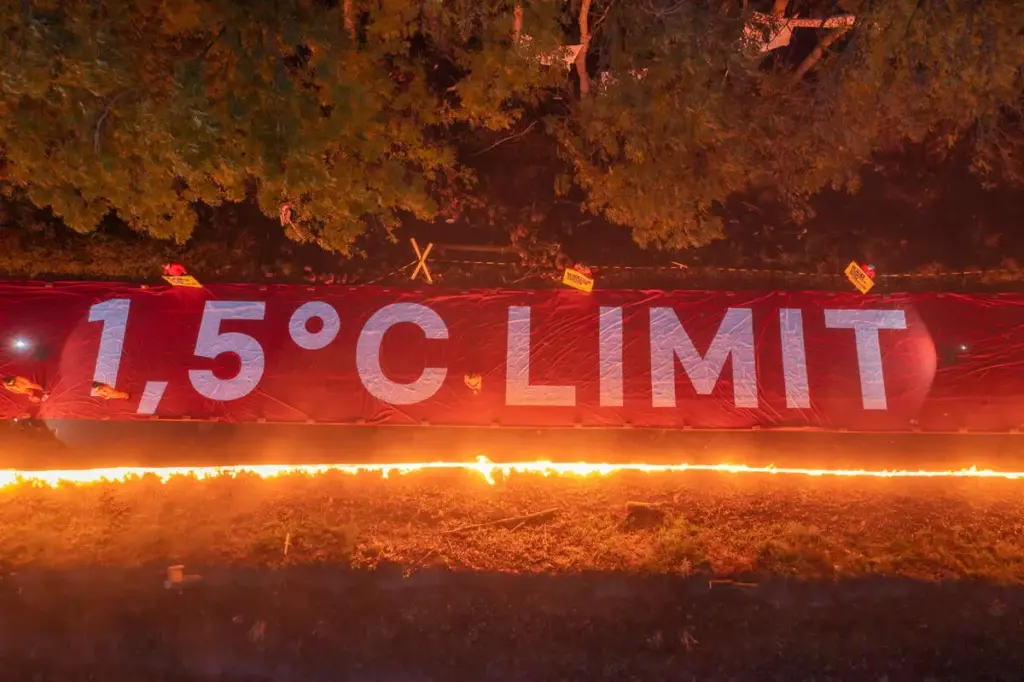
AMSTERDAM — In what environmental scientists are calling a profound psychological and scientific turning point for global climate policy, a landmark United Nations Environment Programme (UNEP) report has confirmed that the world is on track to cross the critical 1.5°C global warming threshold within the next few years. The findings have ignited a firestorm of international reaction, prompting environmental watchdogs, legal scholars, and frontline island nations to demand an immediate, aggressive pivot away from fossil fuels and an end to rampant ecological destruction.
The new UNEP documentation represents the first official United Nations report to formally outline a 1.5°C "overshoot, peak and decline" pathway. Released against a backdrop of intensifying global climate anomalies—ranging from unrelenting, record-shattering heatwaves and catastrophic wildfires to a strengthening "super" El Niño—the report shatters any remaining illusions that the international community can coast into a safe climate future without immediate, radical intervention.
As world leaders prepare for upcoming sessions at the UN General Assembly and the critical COP31 climate talks, civil society organizations are mobilizing. Greenpeace has stepped forward to urge the Santa Marta "coalition of doers" to spearhead courageous domestic climate action, pushing through turbulent geopolitical currents to deliver concrete progress toward a just, equitable transition away from fossil energy.
Executive Overview: The Reality of the 1.5°C Overshoot
The concept of a global temperature "overshoot" signifies a temporary breach of the 1.5°C above pre-industrial levels threshold enshrined in the landmark Paris Agreement. While the UNEP report suggests that the ultimate magnitude and duration of this breach can theoretically be capped through aggressive carbon drawdown and emissions mitigation, scientists emphasize that the journey into uncharted thermal territory carries profound, irreversible risks.
Under the report’s best-case scenario—assuming nations globally meet and actively exceed their current nationally determined contributions—global temperatures are projected to peak at approximately 1.8°C before beginning a multi-decade descent back toward 1.5°C. However, spending any amount of time above the 1.5°C ceiling drastically amplifies the likelihood of triggering irreversible climatic tipping points. These include the collapse of major ice sheets, the dieback of the Amazon rainforest, and the destabilization of critical oceanic circulation systems.
Furthermore, legal realities now match the physical ones. In a sweeping Advisory Opinion, the International Court of Justice (ICJ)—backed by a definitive UN General Assembly resolution—confirmed that maintaining warming within the 1.5°C boundary is not merely a policy preference or an aspirational target. It is a binding legal obligation for all states, with high-emitting industrialized nations bearing the heaviest historical responsibility to act fastest and most decisively.
Detailed Chronology: From Scientific Warning to Diplomatic Mobilization
Phase 1: The Gathering Storm of Climate Extremes
The road to this sobering UNEP disclosure has been paved by years of escalating climate disasters. Throughout the early 2020s, scientific monitoring networks recorded successive hottest years on record. Communities across the Northern and Southern Hemispheres experienced unprecedented atmospheric rivers, prolonged multi-year droughts, and catastrophic wildfire seasons that devastated ecosystems from the Mediterranean to Canada and Australia.
Phase 2: The UNEP "Overshoot" Realization
The publication of the UNEP assessment marks a psychological and strategic paradigm shift. For decades, international climate negotiations operated under the assumption that 1.5°C could be strictly avoided if emissions plummeted quickly enough. By formally modeling an "overshoot, peak and decline" trajectory, the UN has acknowledged that human inaction has made a temporary breach virtually unavoidable.
Phase 3: Synchronized Global Push—From Palau to Amsterdam
Coinciding with the release of the UNEP report, Pacific Island Forum leaders convened in Palau to cement regional solidarity and forge a unified front ahead of COP31. For these island nations, whose very sovereignty is threatened by sea-level rise, the bureaucratic concept of an "overshoot" is an existential danger rather than an academic projection. Simultaneously, international advocacy groups like Greenpeace launched coordinated policy briefings and diplomatic offensives, linking the scientific data directly to legal accountabilities laid down by the International Court of Justice.
Supporting Context & Metrics: The Mathematics of Intergenerational Risk
The implications of an overshoot extend far beyond immediate weather extremes; they introduce a profound structural debt passed down to future generations.
- The 1.8°C Peak Reality: Even under the most optimistic emissions-reduction scenarios modeled by UNEP, global temperatures are projected to peak at 1.8°C. This elevation introduces severe hazards to global food security, marine ecosystems (including near-total coral reef degradation), and water availability.
- The Decadal Lag: Bringing global temperatures back down from an overshoot peak is not a rapid process. Climate inertia dictates that reversing a fraction of a degree requires decades, if not centuries, of sustained net-negative carbon emissions. During this protracted cooling period, damages to vulnerable ecosystems and coastal communities will continue to compound.
- Legal and Historical Liability: According to the ICJ Advisory Opinion, nations with high historical carbon footprints are legally required to lead mitigation efforts. This establishes a direct line between historical industrial emissions and contemporary climate litigation, paving the way for "polluter pays" financing mechanisms.
Official Statements: Voices from the Frontlines and Scientific Front
The gravity of the UNEP warning has elicited strong, unified condemnation of political inertia from leading scientists, environmental advocates, and regional campaigners.
Jasper Inventor, Deputy Programme Director at Greenpeace International, emphasized that surrender is not an option:
"This is news none of us wanted to hear, but overshoot is not the reason to give up and surrender 1.5°C. It’s a heartbreaking moment, and we need to reflect on that, but every fraction of a degree still matters and the UNEP report must now serve as a defining call to action.
The 1.5°C goal is not only a legal, political and moral threshold — it’s our lifeline and what we do today and tomorrow will determine our fate. Governments must accelerate a fast, fair and funded just transition into renewable energy, ensure we end and reverse forest destruction by 2030 and hold fossil fuel polluters and forest destroyers to account. To help finance climate action, we must also make polluters pay for climate damages."
Speaking from the Pacific Island Forum in Palau, Moemoana Schwenke, Pacific Climate Campaigner at Greenpeace Australia Pacific, underscored the existential threat facing oceanic nations:
"For the Pacific, 1.5°C is not an ambition, it is a survival line. It is a matter of justice, sovereignty and our right to determine our own futures in our Pacific way. We inherit our lands, oceans and cultures as an entrusted responsibility, not a commodity to be exhausted.
The International Court of Justice has already been clear that 1.5°C is a legally binding obligation, not just a choice. Pacific communities, for decades, have been clear that our ways of life, homes and livelihoods are under threat from climate disasters and impacts. An overshoot is not compatible with Pacific wellbeing.
The court and governments must translate responsibility into action: a rapid, just and legally grounded transition away from fossil fuels with no further expansion of coal, oil and gas."
Dr. Jerry Jose, Senior Scientist at the Greenpeace International Science Unit, detailed the compounding hazards of delayed stabilization:
"Among the many stark warnings, the UNEP report presents the intergenerational burden climate change will impose on future communities in an overshoot scenario. The risks of permanent change escalate as our climate warms. In addition, the multiple decades needed for a decline in the global temperature back to 1.5°C would exacerbate already uneven impacts, many of which having the potential to continue well beyond stabilisation.
Deep and sustained mitigation in the near-term is essential to limit the peak and duration of the overshoot we are leaving our future generations. Even a decline of temperature is ‘not a given’ and depends on decisions and actions taken today. This raises profound questions about intergenerational responsibility and must compel us to act now."
Future Outlook: The Road to COP31 and Beyond
As the international community digests the UNEP findings, all eyes turn toward the upcoming UN General Assembly and the runway to COP31. The window to prevent irreversible planetary destabilization is narrowing rapidly, shifting the focus of international diplomacy from voluntary carbon pledges to enforceable, legally binding frameworks.
To successfully navigate the perilous waters of a potential 1.5°C overshoot without sliding into catastrophic, runaway warming, global policy must immediately pivot on three fronts:
- Immediate Fossil Fuel Phase-Out: A managed, equitable, and fully funded transition away from coal, oil, and gas extraction, backed by a total moratorium on new fossil fuel expansion.
- Ecological Restoration: Halting and reversing global deforestation and land degradation by 2030 to preserve natural carbon sinks.
- Enforcement of Polluter Accountability: Operationalizing the legal opinions of the International Court of Justice by forcing major corporate and state polluters to finance climate adaptation and loss-and-damage funds for frontline communities.
The science is unambiguous, the legal obligations are set, and the cost of delay is measured in human lives and planetary stability. Whether global leaders possess the political courage to match the scale of the crisis remains the defining question of our era.