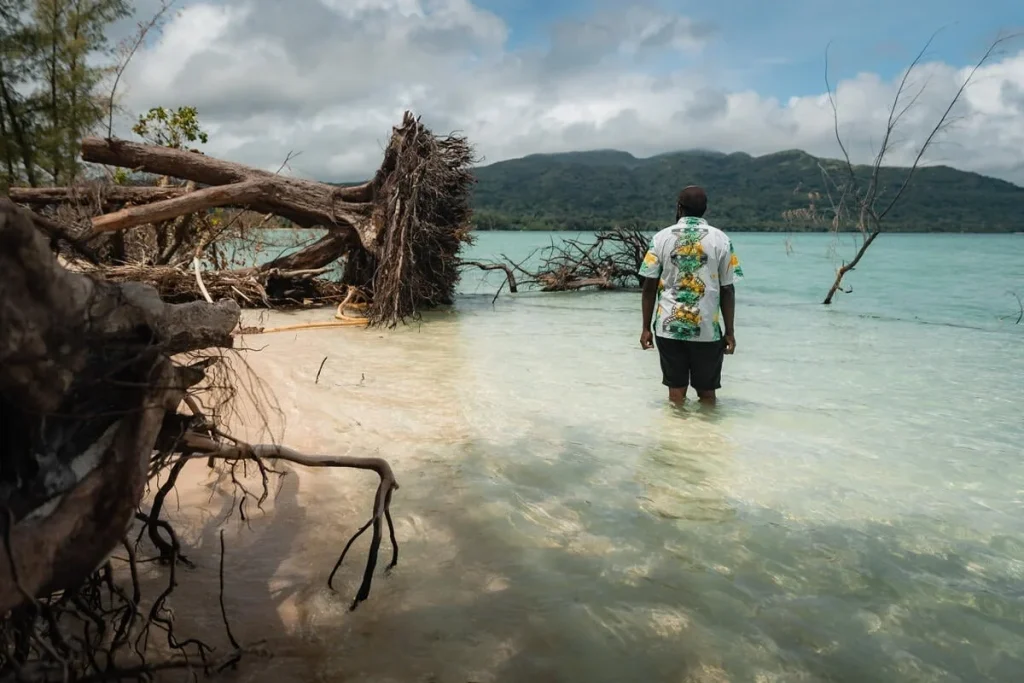
As the Pre-COP31 climate summit convened in Nadi, Fiji, the proceedings opened with an unambiguous declaration that reverberated far beyond the conference halls: the Pacific Islands are not merely a picturesque backdrop for international climate diplomacy, nor are they a passive staging ground for bureaucratic negotiations. Rather, they serve as the ultimate litmus test for the credibility of global climate commitments.
This high-stakes gathering represents a vital milestone on the perilous road toward COP31 in Türkiye, where Australia—in strategic partnership with Pacific island nations—is slated to assume the reins of international climate negotiations. Yet, this prospective leadership role is fraught with deep-seated tensions. For the nations of Oceania, the climate crisis is not an abstract policy challenge or a distant horizon; it is an immediate, existential emergency. Their demands are clear, uncompromising, and urgent: keep global warming strictly within the 1.5°C threshold, make climate finance genuinely accessible to frontline communities who need it most, and place the health of the ocean at the very heart of the global climate agenda.
However, a yawning chasm exists between the rhetoric of regional leaders and their domestic actions. While Australian officials, including Climate Change and Energy Minister Chris Bowen, speak eloquently of elevating Pacific voices, visiting vulnerable sites like Tuvalu to witness the frontlines of destruction, and championing climate urgency abroad, these words are increasingly undermined by a contradictory domestic policy. Australia continues to approve, subsidize, and extend massive coal and gas projects that directly fuel the very crisis threatening its Pacific neighbors.
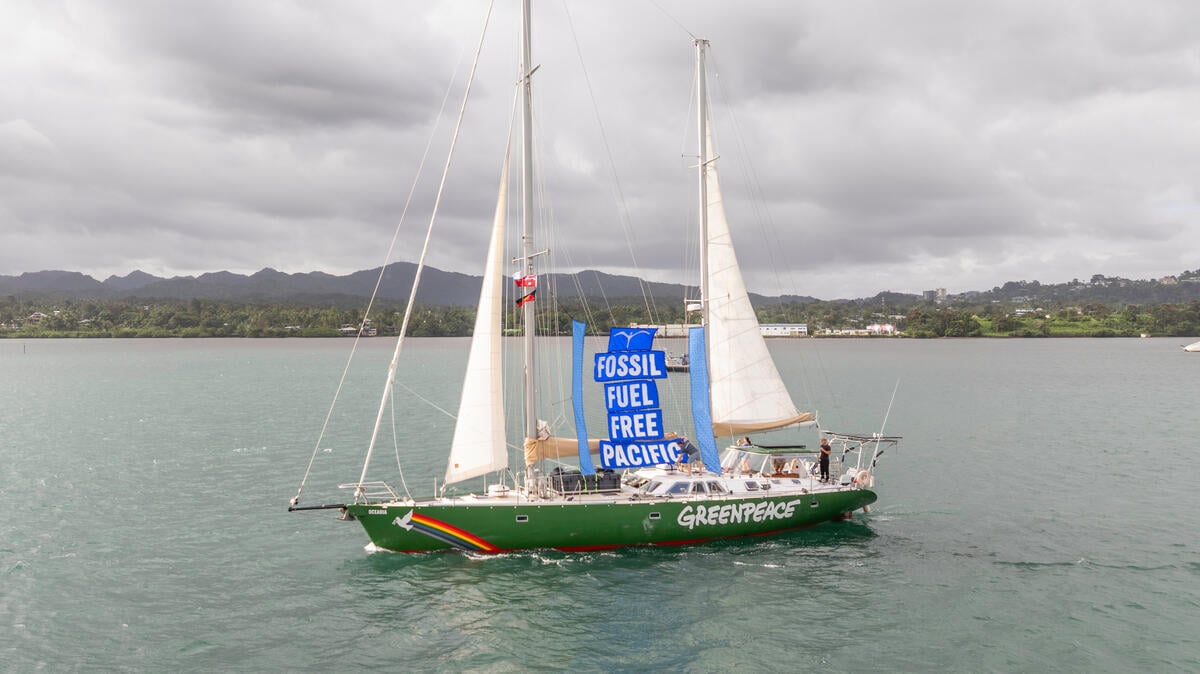
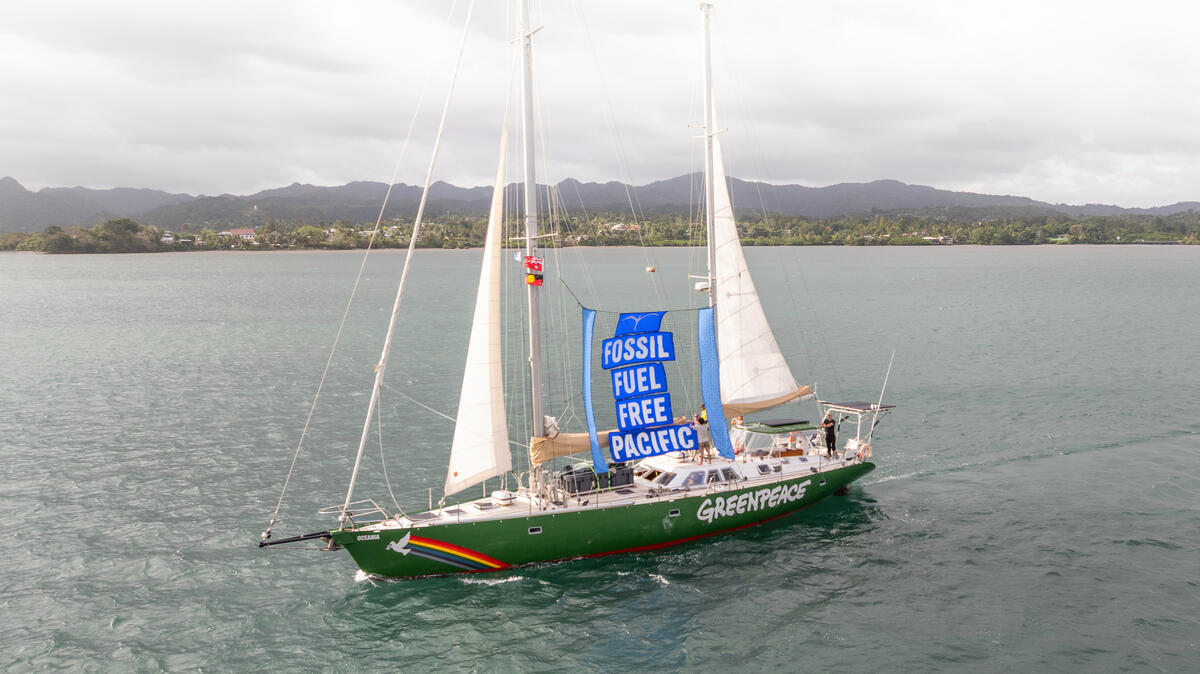
Against this backdrop of diplomatic posturing and grassroots resistance—highlighted by the arrival of the Greenpeace campaigning vessel SV Oceania in Suva and direct-action blockades at the world’s largest coal port—the message from the Pacific is resolute. The region refuses to be treated as a sacrifice zone. COP31 must transcend empty dialogue and incremental targets; it must forge a credible, enforceable pathway to phase out fossil fuels entirely.
Detailed Chronology: From Regional Voyages to Global Diplomacy
The momentum leading up to the Nadi Pre-COP31 gathering has been marked by a deliberate mobilization of civil society, community resilience, and direct confrontation against fossil fuel interests across Australasia.
The Arrival of the SV Oceania
A central focal point of community engagement in the lead-up to the talks was the arrival of the Greenpeace campaigning vessel, the SV Oceania, into Suva, Fiji. Marking its first port of call in Suva following an extensive and grueling voyage from Australia, the vessel and its crew were met with a profound traditional welcome and warm embraces from the local Fijian community.
Rather than serving merely as a transport or symbolic vessel, the SV Oceania has been deliberately utilized as a floating platform for climate justice campaigning, alliance-building, and media engagement. During its time in Suva, the crew participated in collaborative events with local school children, traditional welcoming ceremonies, and strategic strategy sessions with regional leaders. These activities served a vital purpose: gathering authentic community voices, grassroots testimonies, and indigenous wisdom to directly inject into the formal proceedings at the Pre-COP. The overarching objective of the Voyaging Oceania tour is to breathe life into the shared vision of a resilient, Fossil Fuel Free Pacific.
Direct Action on the Industrial Front
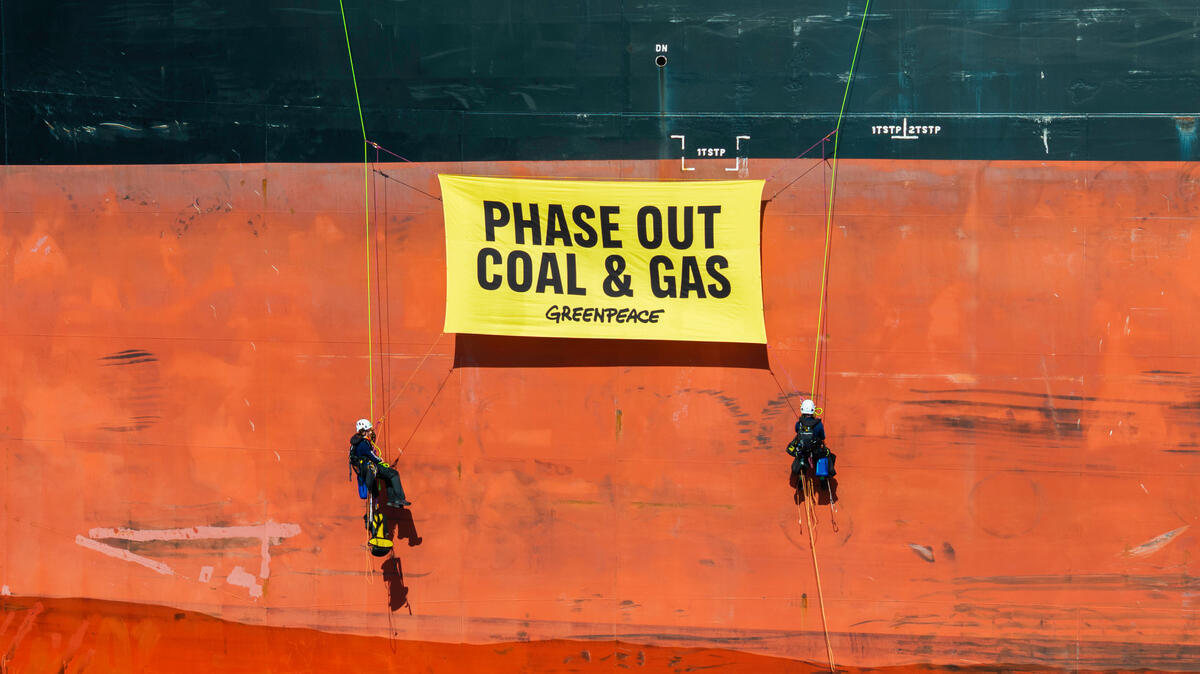
While diplomats debated frameworks in air-conditioned rooms in Fiji, the friction between rhetoric and reality played out dramatically thousands of miles away in Australia. Greenpeace Australia Pacific activists carried out high-profile direct actions, scaling and successfully blocking the coal ship Yangze 16 as it attempted to enter the Port of Newcastle—the world’s largest coal export port—during the Rising Tide People’s Blockade.
Climbing the vessel, activists unfurled a massive, unmissable banner directed squarely at the Australian federal government: "Phase Out Coal and Gas." This bold action underscored a fundamental truth of the current geopolitical landscape: Pacific communities and international civil society are unwilling to stand by while new fossil fuel extraction projects are rushed through approval pipelines, undermining the very targets international summits are convened to protect.
Supporting Context & Metrics: The Mathematics of Survival
To understand the profound urgency driving Pacific delegates and civil society leaders in Nadi, one must examine the stark realities of climate metrics, geographical vulnerability, and the catastrophic implications of policy failures.
The Myth of "Overshoot"
In international climate negotiations, technocrats frequently invoke the concept of "temperature overshoot"—a scenario in which global greenhouse gas emissions temporarily push global average temperatures past the 1.5°C threshold before technological carbon removal supposedly brings them back down.
For the Pacific, however, overshoot is not a harmless academic or technical modeling exercise. It is a death sentence. Every fraction of a degree past the 1.5°C threshold translates directly into compounding loss and damage:
Accelerating Sea-Level Rise: Higher temperatures drive thermal expansion and glacial melt, submerging low-atoll nations like Tuvalu, Kiribati, and the Marshall Islands.
Intensified Extreme Weather: Stronger, more frequent tropical cyclones devastate critical infrastructure, housing, and agricultural systems.
Ecosystem Collapse: Widespread marine heatwaves trigger devastating coral bleaching events across Pacific reefs, destroying artisanal fisheries and the marine biodiversity upon which millions depend.
Cultural Erasure and Displacement: Land loss forces communities off ancestral lands, threatening indigenous sovereignty, intangible cultural heritage, and traditional ways of life.
Asking the Pacific to endure an overshoot scenario is, in effect, asking frontline communities to absorb ongoing harm so that major polluters can delay the difficult work of rapid decarbonization.
The Paradox of Australian Climate Policy
Australia occupies a uniquely hypocritical position within the Pacific "family." As a developed economy and a major global exporter of coal and liquefied natural gas (LNG), Australia’s historical and contemporary emissions heavily influence the acceleration of climate impacts across Oceania.
While Canberra has committed to net-zero targets and positioned itself as a co-host and partner for COP31 alongside Pacific island nations, its domestic fossil fuel licensing regime tells a radically different story. Dozens of new coal mines and gas extraction fields have been greenlit or granted extensions in recent years. This creates an untenable paradox: a government utilizing the existential vulnerability of Tuvalu and other island nations to project moral leadership on the global stage, while simultaneously defending and expanding the very industries driving that vulnerability at home.
Official Statements and Perspectives
The ideological battle lines of Pre-COP31 were sharply drawn through the contrasting statements of high-ranking government officials, indigenous representatives, and international environmental advocates.
The Official Narrative
Representing Australia, Climate Change and Energy Minister Chris Bowen emphasized the importance of centering Pacific voices, accelerating the implementation of climate adaptation strategies, and inviting international leaders to witness firsthand the realities of climate change in vulnerable nations like Tuvalu.
"We must elevate Pacific voices, accelerate implementation, and ensure that global leaders witness what is truly at stake on the frontlines of this crisis," Bowen asserted during regional engagements.
While these remarks were acknowledged as diplomatically necessary, they were widely scrutinized by civil society groups as insufficient window-dressing that fails to address the core driver of the crisis: fossil fuel production.
The Civil Society and Indigenous Rebuke
Jasper Inventor, Deputy International Program Director for Greenpeace International, speaking directly from the ground in Nadi, Fiji, delivered a scathing critique of government double-talk and a passionate defense of regional sovereignty:
"The opening of the Pre-COP31 climate meeting in Nadi carried a clear message: the Pacific is not a backdrop for global climate diplomacy. It is where the credibility of that diplomacy will be tested," Inventor stated.
He further emphasized that listening to Pacific stories carries an inherent, non-negotiable responsibility to act upon them, rather than simply repurposing them as emotional anecdotes for conference speeches:
"Australia cannot call itself part of the Pacific family while continuing to approve or extend coal and gas projects that intensify the crisis threatening that family… What the Pacific needs now is not sympathy, symbolism or strategic branding. It needs genuine solidarity expressed through ambitious climate action."
Future Outlook: The Road to COP31 and Beyond
As the international community looks ahead to COP31 in Türkiye, the fundamental parameters for success have been permanently altered by the unwavering stance of Pacific nations.
Beyond Electrification: The Imperative of Fossil Fuel Phase-Out
While recent presidency-led proposals—such as the newly unveiled COP31 electrification targets—represent welcome technical steps toward clean energy adoption, civil society organizations and Pacific negotiators have issued stern warnings. Electrification targets, standing alone, are dangerously insufficient. They run the risk of becoming a convenient distraction from the central, unavoidable issue: bringing an immediate halt to the extraction and geographic expansion of coal, oil, and gas.
To achieve genuine credibility, COP31 must establish a binding, transparent, and robust pathway for a global just transition away from fossil fuels. This transition framework must explicitly incorporate:
Worker and Community Protections: Ensuring that communities historically dependent on fossil fuel extraction are supported through economic diversification, retraining, and social safety nets.
Equitable Renewable Energy Expansion: Democratizing access to affordable, decentralised renewable energy systems across developing nations.
Climate Finance Justice: Reforming international financial architecture to ensure that adaptation and mitigation funds flow directly and rapidly to frontline and indigenous communities without burdensome bureaucratic hurdles or compounding debt burdens.
The Final Verdict
The Pacific Islands have consistently contributed the least to the atmospheric concentration of greenhouse gases, yet they continue to provide some of the most profound moral leadership, scientific knowledge, and resilient solutions on the global stage.
The question facing Australia, Türkiye, and the wider international community as they journey toward COP31 is no longer whether they can draft eloquent agreements or formulate clever strategic branding exercises. The question is whether they possess the political courage to align their actions with the survival of their neighbors. Pacific voices have spoken with absolute clarity. The world is now tasked with listening—and acting accordingly.