

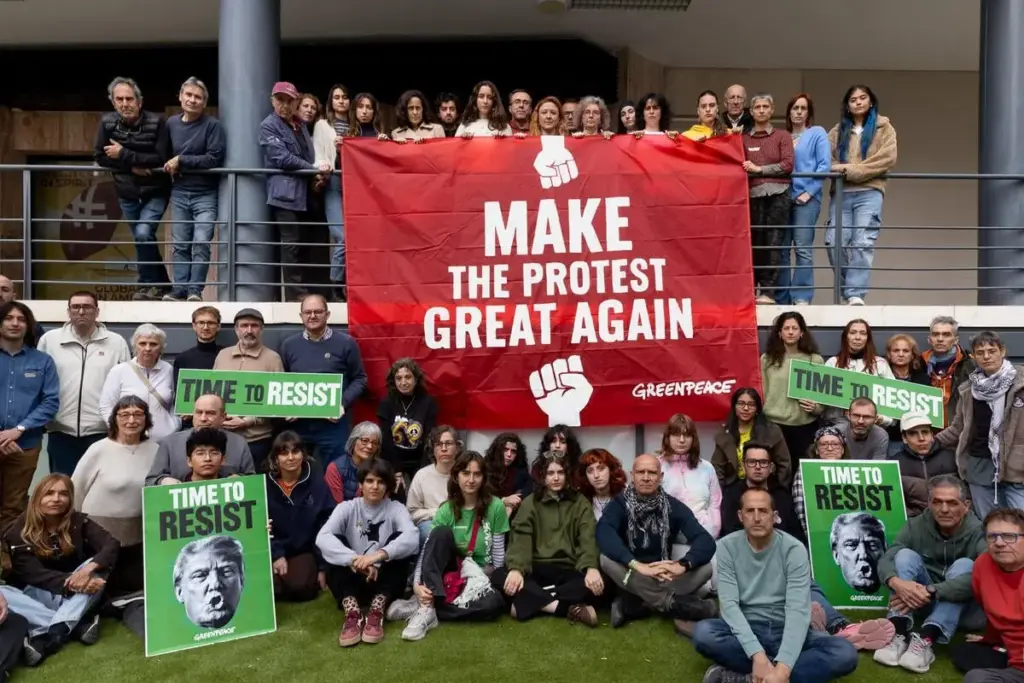
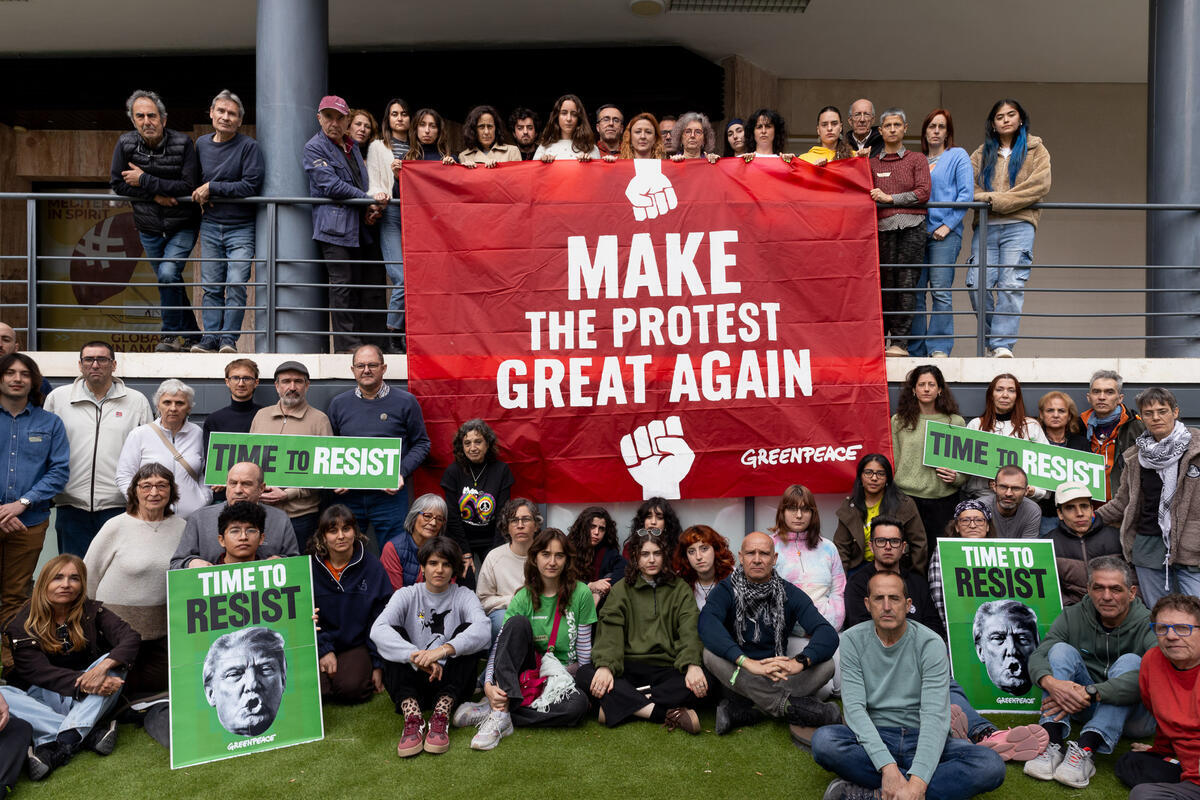
VALENCIA, SPAIN — In a landmark legal victory for environmental defenders, a Spanish court has unequivocally rejected severe criminal charges against 11 Greenpeace activists, bringing to a close a high-stakes trial that many international legal observers feared could set a dangerous precedent for peaceful dissent across Europe.
The ruling, handed down on October 6, 2026, dismissed accusations of "aggravated public disorder" stemming from a direct-action protest executed nearly five years prior. At the height of the state’s legal pursuit, the Public Prosecutor’s Office had demanded a staggering five-year prison sentence for each defendant—a punishment more commonly reserved for violent offenses than for civil disobedience.
The court’s verdict delivers a resounding affirmation of a core principle championed by climate movements globally: Activism is not a crime. Yet, while the immediate legal threat has lifted for the eleven defendants, the case has ignited an urgent, worldwide conversation regarding the weaponization of judicial systems to suppress environmental advocacy, deter public participation, and shield fossil fuel interests from accountability.
Executive Overview
The origins of the legal battle trace back to October 2021, when Greenpeace’s flagship vessel at the time, the MY Esperanza, entered the Port of Sagunto on the eastern coast of Spain. The mission was explicit: to protest the arrival of the Merchant, a massive liquefied natural gas (LNG) tanker carrying 138,000 cubic meters of fracked fossil gas from the United States.
What followed was a disciplined, non-violent maritime blockade designed to draw public and political attention to Europe’s dangerous reliance on volatile fossil fuels—precisely as European energy ministers convened to debate soaring energy prices. Although the protest was executed with meticulous regard for safety and transparent communication with maritime authorities, the state response was heavy-handed. Initially slapped with exorbitant administrative fines exceeding €160,000, the activists later found themselves facing criminal charges that threatened to strip them of half a decade of their freedom.

The trial, held in Valencia on September 23, 2026, became a focal point for international civil rights organizations, drawing monitors, environmental delegations, and United Nations representatives. When the presiding judge ultimately dismissed the aggravated public disorder charges due to a total lack of evidence showing violence, intimidation, or disruption of the public peace, it marked a vital checkpoint in the ongoing global defense of civic space.
Detailed Chronology: From the Waters of Sagunto to the Courtroom
October 2021: The Blockade at the Port of Sagunto
The action at Sagunto was meticulously planned to coincide with an extraordinary meeting of European energy ministers in Luxembourg, where officials were grappling with the catastrophic impact of spiking energy costs on vulnerable households. Greenpeace mobilized a diverse crew of activists representing 18 nationalities aboard the MY Esperanza and a fleet of inflatable boats.
The target was the Merchant, an LNG carrier laden with the equivalent of 41 Olympic swimming pools’ worth of compressed methane extracted via hydraulic fracturing ("fracking")—widely recognized as one of the most ecologically destructive extraction methods on Earth.
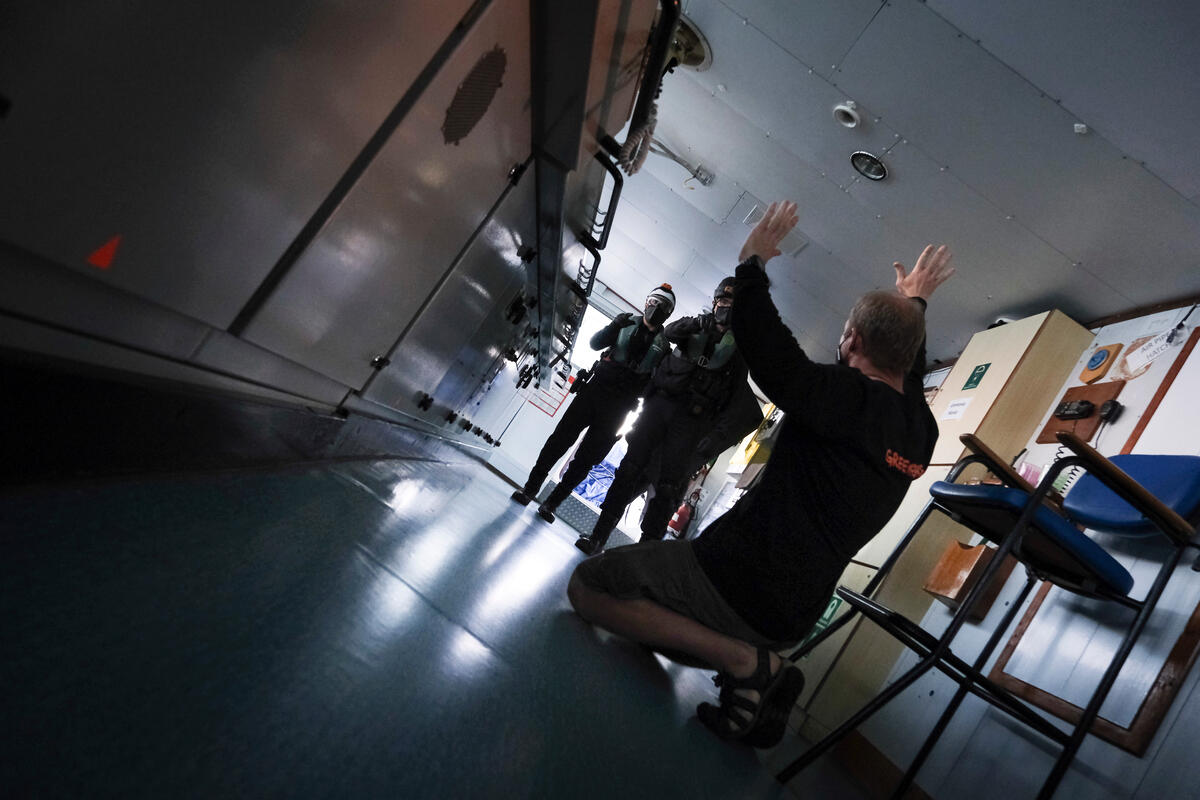
To delay the tanker’s entry, a disciplined activist chained himself to the Esperanza’s anchor, holding his position for 12 hours while maintaining calm, open lines of communication with local port authorities. For twelve hours, the blockade held firm until Spain’s Civil Guard boarded the vessel, severed the anchor chains, and forced the ship into port. Throughout the entire operation, no injuries were sustained, and no property was intentionally damaged.
The Escalation: From Administrative Fines to Criminal Indictment
The initial state reaction relied on financial penalties. In 2022, Spanish authorities levied fines totaling more than €160,000 against Greenpeace, citing infractions such as obstructing another vessel and failing to request specific pilotage and towing services within the port. Those administrative penalties remain under legal appeal.
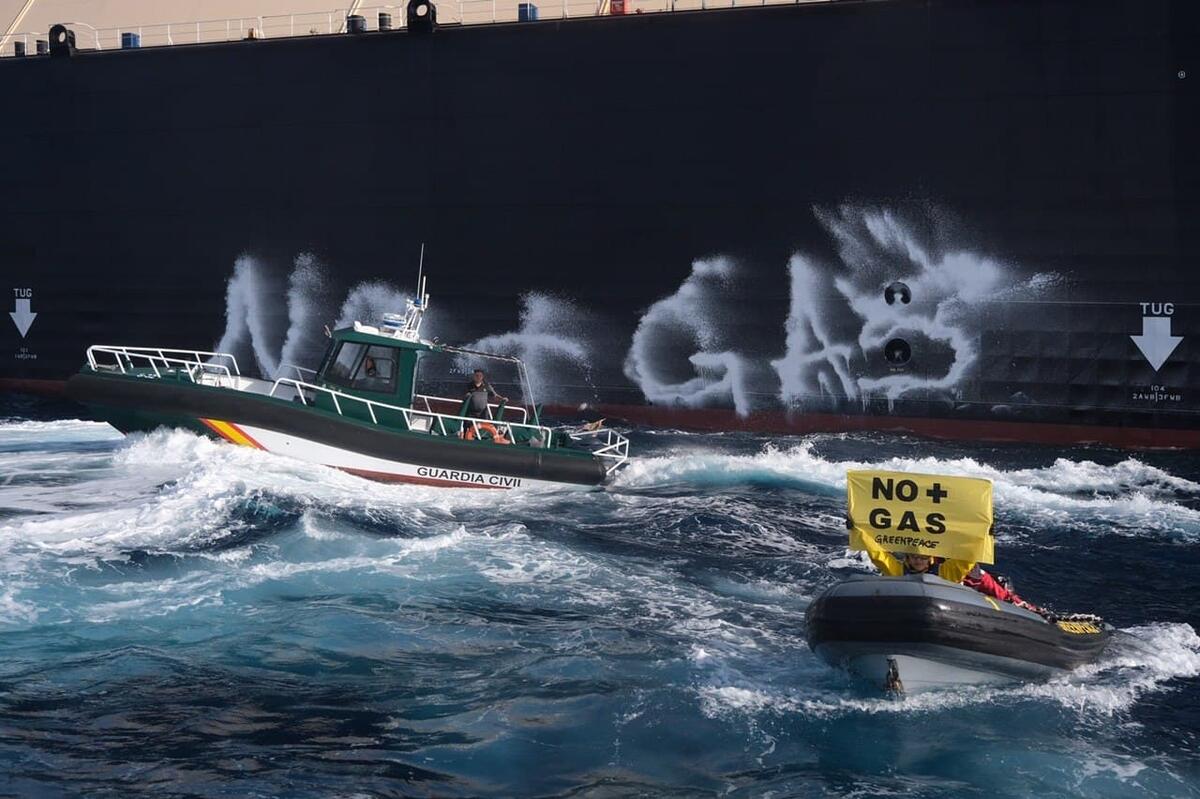
However, the legal landscape shifted dramatically—and alarmingly—when the Public Prosecutor’s Office escalated the matter from administrative infractions to criminal prosecution. Charging the activists with aggravated public disorder, the state demanded five years of imprisonment per individual. Legal scholars and human rights defenders quickly pointed out that this was one of the harshest sentencing demands ever sought in Europe for a peaceful environmental protest. Even as the trial commenced and the prosecution belatedly acknowledged that the five-year demand exceeded the statutory maximums applicable in 2021 (laws had changed in 2023), the revised demand of two and a half years remained a deeply disproportionate threat.
September–October 2026: The Trial and Verdict
During the September 23 trial before a single judge in Valencia, the absurdity of the state’s case unravelled under scrutiny. Testimony from police officers and the shipping agent representing the tanker confirmed that the protest had been entirely peaceful.
On October 6, 2026, the court delivered its verdict. The judge formally rejected the charge of aggravated public disorder, ruling that the prosecution had completely failed to establish any element of violence or intimidation capable of altering the public peace. The 11 activists were vindicated, bringing immense relief to the defendants and their global supporters.
Supporting Context & Metrics: The Global War on Dissent
To fully understand the Sagunto trial, it must be viewed not as an isolated incident, but as a prominent frontline battle in a worldwide trend of shrinking civic space.
According to legal experts within international environmental organizations, governments and corporate entities are increasingly utilizing the legal system to neutralize climate dissent. This manifests in several distinct ways:
- SLAPP Suits (Strategic Lawsuits Against Public Participation): Wealthy corporate polluters frequently deploy abusive litigation to drain the financial and emotional resources of advocacy groups and individual activists.
- Criminalization of Disruption: Peaceful blockades and banner drops—long-standing traditions of civil disobedience—are increasingly reframed by prosecutors as threats to national security or public safety.
- Systemic Repression in Spain: In Spain alone, more than 30 Greenpeace activists are currently navigating various criminal proceedings simply for participating in climate protests.
Daniel Simons, Greenpeace International Senior Legal Counsel for Strategic Defence, notes that this phenomenon is driven by vested interests who recognize the undeniable efficacy of public protest. "Industries that have a lot at stake know that protest works," Simons explains. "They invest heavily in curbing dissent, reframing protesters as a security threat, and shaping laws so that peaceful but disruptive protests can be prosecuted."
Official Statements and International Reactions
The implications of the Sagunto trial resonated far beyond the borders of Spain, drawing high-profile observers to Valencia, including the crew of the Greenpeace ship Arctic Sunrise, international delegates, and United Nations human rights officials.
Gina Romero, the United Nations Special Rapporteur on the Rights to Freedom of Peaceful Assembly and of Association, whose office sent a representative to monitor the proceedings, issued a stark warning regarding the global trajectory of civil liberties:
"The Sagunto case demonstrates how easily the legal system can be used to deter people from exercising a fundamental right, even when the law agrees in the end they did nothing wrong. It’s part of a broader, global pattern of using the legal system, criminal charges, punitive fines, and restrictive laws to shrink civic space. I will continue to raise the alarm and raise my voice to ensure that peaceful protest is not treated as a crime — in Spain or anywhere else."
Michel Forst, the UN Special Rapporteur on Environmental Defenders, also monitored the case, underscoring the vital role that climate activists play in defending planetary health against corporate and governmental inertia.
Future Outlook: What Lies Ahead for Climate Defenders?
While the October 6 ruling is a definitive victory for the 11 Sagunto defendants, the legal battle is not definitively over. The Public Prosecutor’s Office retains the legal right to appeal the acquittal. However, legal representatives for Greenpeace have expressed hope that state authorities will redirect their resources away from criminalizing citizens who safeguard the planet, and toward addressing the compounding crises of climate change and environmental degradation.
Reflecting on over 50 years of civil disobedience, Greenpeace organizers emphasize that historical victories—from halting toxic waste dumping to protecting old-growth forests—have almost invariably relied on citizens willing to put their bodies on the line when institutional channels fail.
As democratic societies grapple with what psychologists term the "Cassandra complex"—where authorities punish messengers delivering uncomfortable, science-based truths—the defense of free speech and peaceful assembly remains paramount. Whether facing pre-trial detentions like the Arctic 30 in Russia or multi-year prison threats in Western Europe, the global climate movement continues to prove that solidarity is the ultimate shield against corporate intimidation and authoritarian overreach.
Lindsay Bigda serves as Deputy Communications Lead for Greenpeace’s Time to Resist programme, focusing on abusive lawsuits used to silence public participation.



