Executive Overview
Healthy soil has long been understood as the holy grail of regenerative organic agriculture, providing the biological foundation for global food security, climate resilience, and nutrient-dense crops. Yet, soil covers less than one-third of our blue planet. Water dominates more than 70 percent of the Earth’s surface, serving as an expansive, largely untapped frontier for human nourishment and economic livelihood.
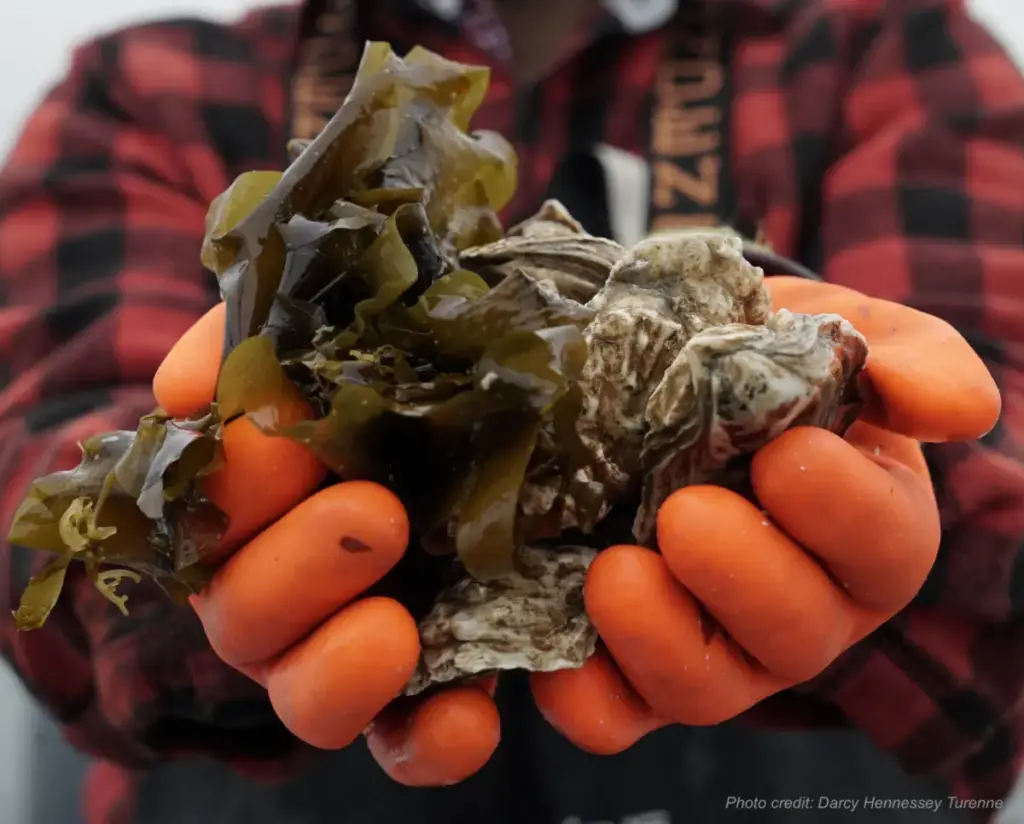
In a groundbreaking move to redefine the boundaries of sustainable agriculture, the renowned Rodale Institute has officially forged a strategic research partnership with GreenWave, a pioneering organization dedicated to regenerative aquaculture. This collaboration is designed to explore how ocean-based food production can directly supply valuable, nutrient-rich resources to land-based farmers. By investigating the efficacy of ocean-harvested biostimulants—specifically kelp—as a natural alternative to synthetic, fossil-fuel-derived fertilizers, the partnership seeks to break down historical silos between terrestrial and marine farming.
As global populations soar and climate change strains conventional agricultural systems, this cross-ecosystem alliance offers a transformative blueprint. It unites two distinct yet philosophically aligned movements: one working to heal the soil, the other striving to restore the seas.
Detailed Chronology: From Industrial Overreach to Regenerative Innovation
The Historical Shift from Sea to Land
Before modern humans established sedentary civilizations and mastered crop cultivation, coastal and marine foraging served as primary lifelines for human communities. For generations, traditional coastal populations naturally looked to the ocean not only for protein-packed seafood, but also for vital soil amendments. Seaweed and kelp were routinely hauled ashore to enrich depleted garden beds and crop fields.
This symbiotic relationship between land and sea persisted for centuries until the mid-20th-century advent of industrial, fossil-fuel-driven synthetic fertilizers. Cheap chemical inputs temporarily masked the degradation of agricultural soils, severing the historic nutrient loop that tied coastal farming communities directly to marine ecosystems.
The Evolution of Commercial Aquaculture
Seafood cultivation is far from a modern novelty, but its trajectory changed dramatically in the latter half of the 20th century. According to recent data from the National Oceanic and Atmospheric Administration (NOAA), more than 50 percent of the global seafood supply is now raised on water-based farms. Furthermore, a 2024 report from the USDA Economic Research Service notes that the average American consumer eats roughly 20 pounds of fish and shellfish annually.
However, this massive industrial scaling of aquaculture mirrored the catastrophic mistakes of industrial land farming. In the 1990s, Bren Smith—a native of Newfoundland, Canada, who began commercial fishing for tuna and lobster on the Georges Bank and Grand Banks at age 14—experienced this firsthand. When wild fish stocks plummeted due to overfishing, habitat loss, and climate change, Smith transitioned into finfish aquaculture, hoping to secure "blue jobs" for coastal workers.
Instead, he witnessed industrial aquaculture replicating the worst environmental impacts of land-based factory farming:
- The excessive application of artificial nutrients, pesticides, and antibiotics.
- Severe water degradation and localized marine dead zones.
- The systemic disruption of fragile aquatic ecosystems.
The Birth of GreenWave’s 3D Ocean Farming Model
Disillusioned by conventional finfish farming, Smith envisioned an entirely different approach. He reasoned that humanity should cultivate species that do not require artificial feeding, cannot swim away, and rely exclusively on naturally occurring nutrients already present in the water column.
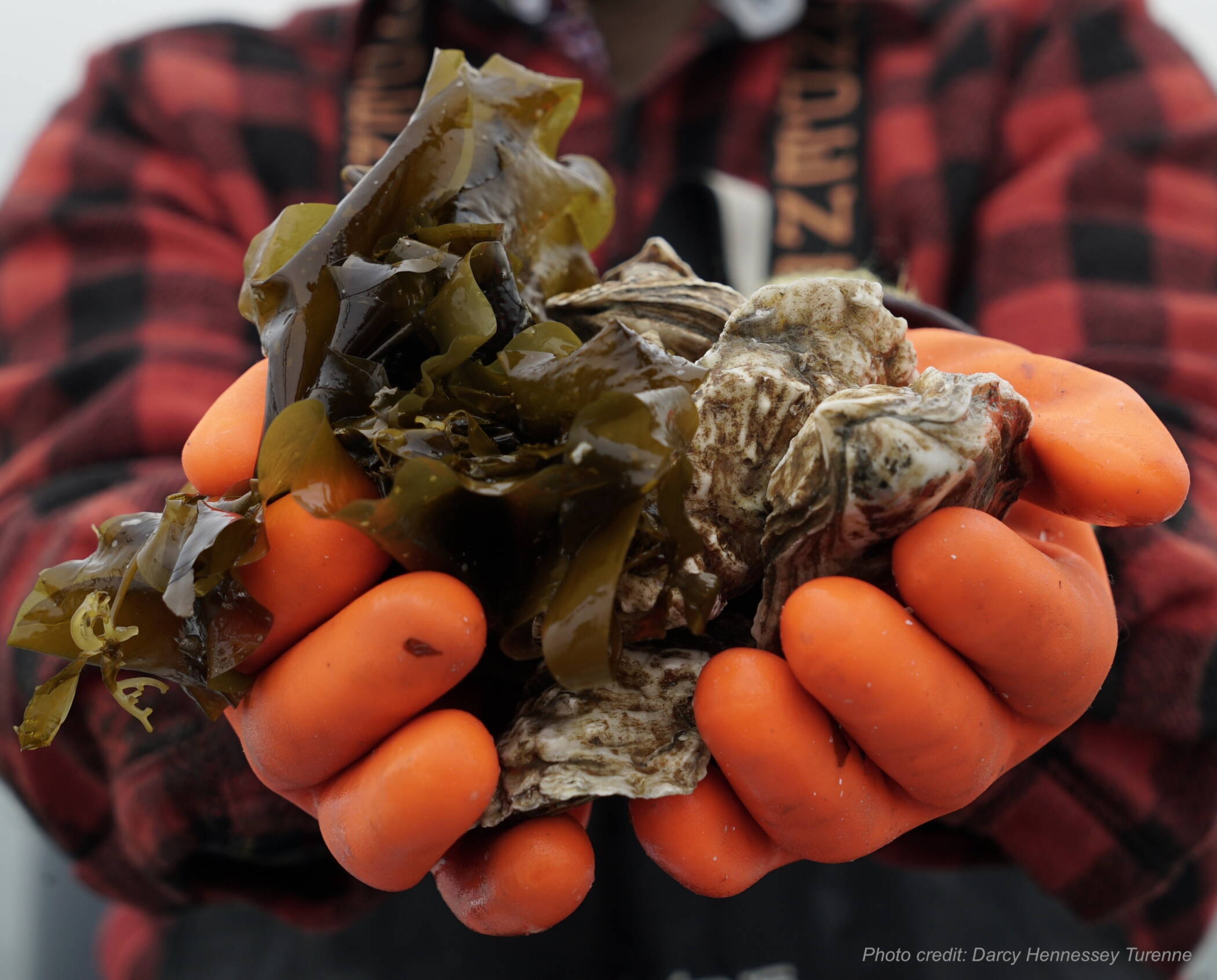
This realization birthed GreenWave and its innovative vertical, multi-trophic underwater farming system. Designed with a minimal physical footprint, these farms utilize hurricane-proof anchors at their margins and floating horizontal ropes suspended just beneath the water’s surface.
- The Upper Canopy: Kelp and other nutrient-rich seaweeds grow downward from the surface ropes, capturing sunlight and dissolved carbon.
- The Mid-Water Column: Scallops thrive in hanging nets, while mussels are suspended in durable mesh socks.
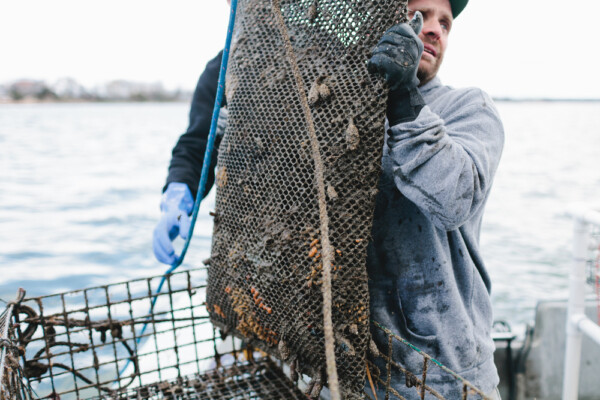
- The Benthic Floor: Oysters reside safely in protective cages, and clams burrow naturally into the sandy ocean floor below.
Because shellfish act as natural filter feeders consuming abundant phytoplankton and algae, and kelp requires zero freshwater, zero synthetic fertilizers, and zero arable land, this model represents a true zero-input food production system.
Launching the Rodale-GreenWave Partnership
Recognizing the vast potential to loop marine resources back into regenerative terrestrial agriculture, GreenWave and the Rodale Institute formalized their research partnership. By combining GreenWave’s open-source ocean farming toolkits—which have already trained over 8,500 ocean farmers, nursery operators, and entrepreneurs since 2017—with Rodale Institute’s decades of rigorous soil science, the two organizations are laying the groundwork for a unified regenerative food economy.
Supporting Context & Metrics
The Environmental Mechanics of Regenerative Ocean Farming
The ecological benefits of GreenWave’s 3D farming model extend far beyond food production. Seaweeds such as kelp act as marine sponges, actively absorbing dissolved carbon dioxide from the surrounding water column while releasing large volumes of oxygen. This biological process plays a critical role in mitigating localized ocean acidification—a growing threat driven by rising global temperatures and carbon emissions—thereby helping bivalves build strong, healthy calcium carbonate shells.
Simultaneously, the active filtration performed by oysters, clams, and mussels clarifies the water column. This increased water clarity allows sunlight to penetrate deeper, further accelerating kelp growth in a continuous, mutually beneficial feedback loop.
Yields and Economic Viability
The productivity per acre of regenerative ocean farms challenges conventional metrics of agricultural efficiency. According to GreenWave operational data, a single acre of vertical ocean farm can yield extraordinary volumes:
- Harvest Volume: Up to 250,000 shellfish and 25 tons of marine greens every five months.
- Resource Footprint: Zero freshwater, zero chemical fertilizers, zero artificial feed, and zero land use.
- Financial Accessibility: Through open-source knowledge sharing, an individual with access to roughly 20 acres of water, a standard boat, and an initial capital investment of approximately $30,000 can establish a viable, community-owned co-op.
The Ongoing Scientific Field Trials
To scientifically validate the agricultural utility of kelp as a soil amendment, Rodale Institute launched a comprehensive, multi-year research initiative. Led by soil scientist Dr. Dinesh Panday, PhD, the study features a rigorous two-year field trial paired with a one-year greenhouse experiment.
The research evaluates how GreenWave-sourced kelp biostimulants impact:
- Nutritional Profiles: Assessing changes in the vitamin, mineral, and antioxidant density of specialty vegetable crops, specifically lettuce and bell peppers.
- Soil Microbiomes: Measuring how kelp activates beneficial soil microbes and enhances nutrient uptake.
- Abiotic Stress Resilience: Testing plant defense mechanisms against environmental stressors such as drought.
In these trials, kelp is applied at varying rates across distinct test plots—both independently and in combination with biochar, a widely accepted organic soil amendment. Final results from this exhaustive study are slated for publication in 2027.
Official Statements
The leadership of both organizations emphasizes the profound philosophical and practical alignment driving this collaboration:
"As our global population grows, our food system is being pushed out to sea. We’re going to be eating more food from the sea, and the wild supply will not support us. With Rodale Institute, we are building a healthier food supply and connecting land and ocean farmers through regenerative practices."
— Bren Smith, Cofounder and Co-Executive Director, GreenWave"We have long known that products harvested from the sea have the power to promote plant growth and plant health. Kelp acts as a biostimulant that activates the beneficial microbes in soil, improves nutrient uptake by crops, and protects plants from stress such as drought."
— Dr. Andrew Smith, PhD, Chief Scientific Officer, Rodale Institute"We need credible science to evaluate kelp’s benefits and find out how to get the most from it. We knew we had to have a technically sophisticated partner to dig deep into this. When we were meeting with the research team at Rodale Institute, I knew we were talking farmer to farmer, that we are working toward the same goals."
— Bren Smith, on partnering with Rodale Institute"Kelp has many trace minerals that support healthy plant growth. We are studying its value for specialty crops in regenerative organic systems."
— Dr. Dinesh Panday, PhD, Lead Soil Scientist, Rodale Institute
Future Outlook: A Unified Food System for Land and Sea
As the agricultural sector navigates the compounding crises of degraded arable soils, water scarcity, and climate instability, the Rodale-GreenWave partnership offers a compelling glimpse into the future of food production.
By anchoring regenerative ocean farming in rigorous, peer-reviewed soil science, the initiative bridges two vital domains of human stewardship. If the 2027 research findings confirm that marine biostimulants can systematically enhance soil biology and crop resilience without synthetic chemical inputs, agricultural supply chains may undergo a profound structural shift. Coastal farming communities and inland organic growers could once again share a closed-loop economy—cycling nutrients from the ocean depths to farm fields and back again.
For consumers seeking sustainable dietary choices, this movement also provides clear guidance. Programs such as the Monterey Bay Aquarium Seafood Watch "Super Green List" highlight regenerative marine species—including mussels, clams, oysters, and kelp—as top-tier choices for human nutrition and ecosystem health. Ultimately, as the boundary between terrestrial and marine agriculture continues to dissolve, initiatives like the Rodale-GreenWave partnership prove that restoring the health of our blue planet requires healing both the earth beneath our feet and the waters that sustain our world.